Vatican Council II: An Insider’s Diary

My Time at the Council Part 3 The First Session Ends, Pope John Dies
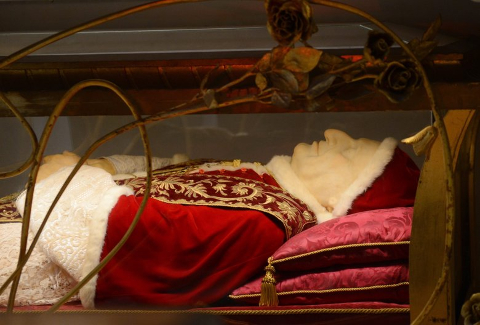
Behind the scenes accounts of being a “periti” or theological advisor to the Cardinal Archbishop of Philadelphia, then a private viewing of Pope John’s body laid out in his bedroom for family, friends and dignitaries, and a brief encounter with John F. Kennedy and much more.

by Anthony, Massimini , Ph.D

“Periti” or theological advisors to the bishops

Rev. Bill Leahy a council scribe. 
Anonymous Cleryman

   I mentioned earlier that many of the council fathers did not understand the spoken Latin.  Some had even greater difficulty writing in Latin.  So when some of the American bishops wanted to speak, they first gave Bill Leahy and me an English copy of their speech.  One or two gave us a scratchy outline!  In the evenings, we put aside our post-graduate studies and wrote the Latin speeches for them.  On one occasion, I told the bishop in question that I had filled in his outline with my own ideas, and cautioned him to go over the speech very carefully to make sure the ideas were also his.  Later, Bill and I would hear one of “our” speeches resound through St. Peter’s Basilica.    

    Bill was a council scribe.  When the council was called, the people preparing for it pulled out the “rules books” for holding a council.  The previous council, of course, was Vatican I, which ended abruptly in 1870.  The one before that was Trent, in the 1500’s.  The rules called for scribes to write down the speeches that were given each day.  A man was brought down from Germany who invented a shorthand system for Latin.  In the evenings, I would dictate to Bill in Latin, using all the different accents I could muster up, and reading faster and faster, until Bill became an expert in taking the dictation.  Then, a day or so before the council opened, he was informed, “We won’t need you to write in shorthand.  This is the 20th century.  We have tape recorders.”   

   One evening, Jesuit Bernard Lonergan, one of our professors and one of the outstanding theologians of the 20th century, came to the American College graduate house for an informal conversation session.  As we discussed his theological views and the council, he quipped, “It’s a good thing the church is not a fire department, because it usually arrives on the world scene late and out of breadth.”
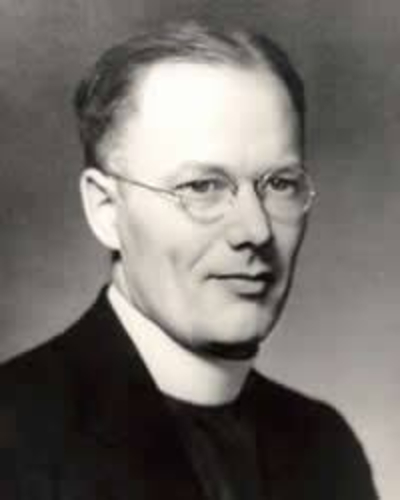
Bernard Lonergan

   In consideration of the American bishops’ difficulty with Latin, Bill had an idea.  Each day he picked out the speeches he deemed to be specially important, made a quick English summary of them, typed them into a mimeograph stencil, ran them off, and then got on his Vespa motor scooter and delivered copies to the seminaries and hotels where the American bishops were staying.  He did this for all the remaining three sessions of the council, while also finishing his work to attain a Licentiate in Scripture and then going on to get a Doctorate in theology!  His collection became known as the Vatican II Digest.  Also, throughout the council, he collected every preliminary document or “Schema” that was presented to the council fathers, then all the changes that were made, and then every final document.  All his papers are now in the Father William K. Leahy collection at  Catholic University in Washington, DC   

The First Session Ends

   The first session of the council closed with an air of optimism on the part of the progressives.  The Liturgy had been updated and Pope John XXIII had personally stopped discussion on Revelation, and on the Church, because the original schemas, written by the Curia, were nothing more than repetitions of old and now out-dated views.  The theologians would lead the council into the 20th century in these two important areas in the coming sessions.  But John’s stomach cancer was progressing and he knew he would not be present for the second session. 

   I settled in to finishing my post-graduate studies.  In early June,1963, I was ready to defend my doctoral dissertation in Spiritual Theology.  My topic was the apparent contradiction between Christian humility and psychological self-esteem.  

Pope John XXIII dies
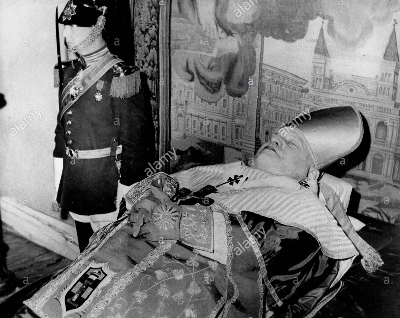
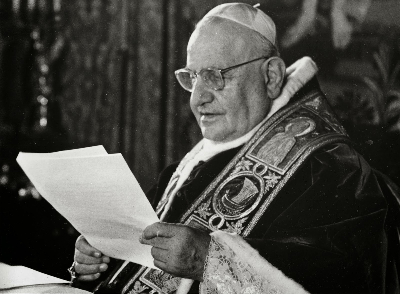
The body of Pope John XXIII

   But a more important event came first.  We heard on the radio that the pope was gravely ill.  Around 6 PM on June 3rd, my classmate from Camden, NJ, Bill Barnett, and I went to St. Peter’s square.  A crowd was there, keeping vigil.  We stayed for a while and then walked down the street a little ways to a trattoria to eat dinner.  Just as we were finishing, we heard a loud, excited sound from the piazza.  We hurried back and looked up at the pope’s apartment window.  A very bright light was shining from inside.  That’s what had made the crowd react.  Then the announcement came over a loudspeaker that John XXIII had just died.  The crowd went silent for a moment, and then people started crying.  Later, we learned that people were mourning throughout the world.  Pope John XXIII had entered history.

   About two days later, I heard on the radio that John’s body was laid out in his private bedroom and that friends and diplomats were welcome to pay their respects.  Another graduate priest said, “Hey Tony, you know the way to the pope’s bedroom, don’t you.”  I said that I did, since I had accompanied my archbishop on a visit to John’s private study.  The pope’s apartment was immediately beyond the study.  “Let’s go,” Jerry said.  I refused, but he was persistent.  We put on our choir robes so we would look like we had a reason to be there, and took a tram to the Vatican.

   Nervously, we approached the grand staircase that leads from the piazza into the papal palace.  Two Swiss guards were on duty.  As we neared them, they jumped to attention and saluted.  Relieved, we went up the stairs into the palace and I directed Jerry to an elevator that would take us up to the floor of the pope’s apartment.  Two monsignori got on with us and I  was sure they would eject us.  But they simply nodded.  We got off the elevator and began our walk through a line of the most fabulously decorated rooms in the world.  Each room was an art museum of paintings, frescoes and sculptures.  Dignitaries and all sorts of papal guards milled around the rooms but no one paid attention to us.  Walking as if we belonged there, we made our way.  Except that somewhere along the way I lost Jerry.  

  Pressing forward on my own, I arrived at the pope’s private study and went in.  The door to his apartment was at the far corner, and a priest stood before it.  I said to myself, “I’ve gotten this far.  If I have to tackle this guy, I’m going to get by him.”  But he just nodded and let me pass.

  When I stepped into the pope’s private apartment, I thought I have mistakenly walked into some servants’ quarters.  The study I had just left was a royal room, with dark red silk flocking on the wall, and red and gold chairs.  Now I was walking along a narrow hallway on a plain wooden floor.  I got to the first room on the left and looked in.  The first thing I saw was an old bureau on which was laid out a panoply of statues and votive candles.  For a moment I thought I was looking into the bedroom of my Italian grandmother back in Philadelphia.  I looked in a little further.  I saw a plain bed, with three large candles rising from the floor on each side.  On the bed lay Pope John.  

  I walked in.  All alone, I stood by his bedside gazing at him.  His body was dressed in a white cassock, with a red shoulder cape.  He was wearing red velvet shoes.  On his head was a medieval red velvet skull cap, lined with ermine.  The papal ring was noticeably missing from his hand. It had been removed and smashed with a silver hammer.  John’s face was plain and serene as ever.  Death had not changed those aspects of him.  Nor had his changed his humility.  A rumor had spread through Rome that because of the great pain of his cancer, he could not even lay on his bed, but had died lying on the floor.  
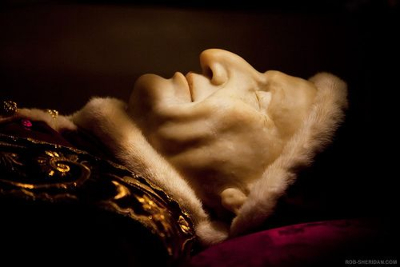
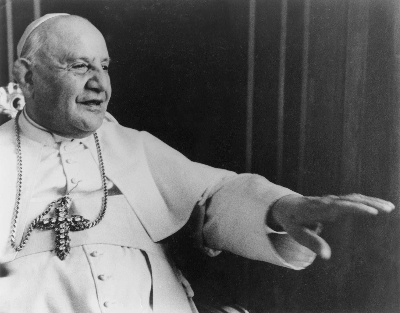
Angelo Giuseppe Roncalli -St. John XXIII

  As I gazed, I wondered at the greatness of this world-renown man now laying so humbly before me in death.  Sadness washed over me, and then gratitude.  There was a kneeling bench at the front of the bed.  I went over and knelt.  I thanked him for the council, for his smiling graciousness, for his humility.  I remembered how he had greeted the Protestant representatives he had invited to the council, using his middle given name, “I am Joseph, your brother.”  And how he had spoke so caringly to a crowd gathered in St. Peter’s Square the evening the council had opened,  “I know that many of you are on your way home from work.  When you get home, kiss your children and tell them it’s from Papa John.”

  I remembered how he had greeted me–not holding out his hand for me to kiss his ring but holding out his arms as if to embrace me, smiling and then laughing as he said, “Oh, you’re Italian!  Where do your parents come from?”  

  I prayed for him.  And for the council.  And then I thanked him for teaching me a great lesson by the way he lived his own life.  I thanked him for teaching me to not be “clerical” or ever stand on ceremony, but to just be myself.             

Meeting President John F. Kennedy
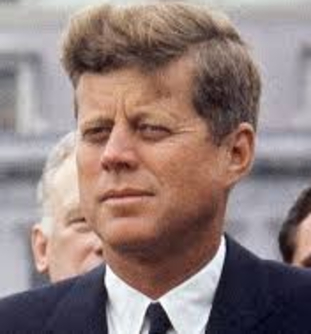
   In June, 1963, President John F. Kennedy visited Ireland, the land of his ancestors, and then went to Berlin where he made his famous statement, “Ich bin ein Berliner.”  He also came to Rome, to the North American College, the residence for American seminarians, on the Janiculum Hill, to receive a gift that Pope John XXIII had wanted to give him.  As it happened, he was in Rome on the day that Pope Paul VI was installed, and since the U. S. did not have diplomatic relations with the Vatican, Kennedy could not be invited.  So we witnessed the fact that the President of the U. S. had to leave town for the day.

  Just about every American dignitary who came to the Vatican also came to the American College.  During my time in Rome, our visitors included Episcopalian John Foster Dulles, (whose Jesuit son, Avery, studied at the Gregorian University at the same time I did), Clare Booth Luce, Vice President and Mrs. Richard Nixon, (it was St. Patrick’s day and Mrs. Nixon’s birthday so we sang, “Happy Birthday” to her.  When we finished, she turned to her husband and with undue modesty said, “Tell them I’m not a saint.”)  Robert and Ethel Kennedy, and Mrs. Jacqueline Kennedy.  One afternoon, in 1959, I was amazed as two United States Army helicopters flew low over the College and then landed on our ball field.  The doors opened and American soldiers ran out and took up positions.  We all ran out to see what was happening.  Then President Dwight Eisenhower stepped out of one of the helicopters.  

   On the day President Kennedy was to come to the College, a few of us, obviously uninvited, took a tram from the graduate house to the Janiculum Hill, where we had lived for four years, and snuck into the official reception room.  Cardinal Richard Cushing, of Boston, a personal friend of the President’s, was there to present him with the gift.  

   The room was filled with American dignitaries in business suits, and church prelates who were ablaze with Episcopal purple and cardinal red.  Then a group of quite obviously American men in suits and ties walked gingerly into the room and took up positions, just as the soldiers had done during Eisenhower’s visit.  Secret Service!  Behind them came the President, smiling brightly.  The excitement became palpable and it seemed as if the lights in the room brightened.  

   Kennedy saw Cushing and walked toward him.  As he got close to the Cardinal,  Cushing, who was taller than the President, shouted, “Hello John!” and then leaned back and took a slow round-house swing at Kennedy.  Kennedy saw it coming and ducked in mock horror.  For a moment, the two horsed around like two college friends at an alumni reunion.  Then they both got serious and Cushing presented the papal gift to the President.
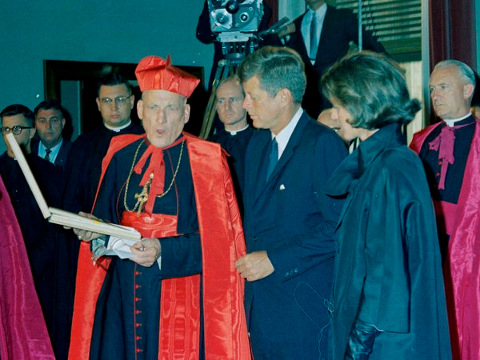
Cardinal Richard Cushing and John F. Kennedy

   As Kennedy got ready to leave, my friends and I–there were four of us–left the room and stood in a hallway that opened to the left of the door.  Kennedy came out and started to walk straight away from the door.  He caught a glimpse of us and turned toward us, holding out his hand. 

   As he approached us I remembered his heroic feat during World War II, when his PT boat was cut in two by a Japanese destroyer, and how he swam to shore pulling a wounded crewman by holding a strap with his teeth.  I marveled anew at how he and his crew kept themselves alive eating coconuts and dodging Japanese patrols until a native carried a message for help, carved into a coconut, to the American forces.  

   When he came to me I shook his hand and said, “Tony Massimini, Philadelphia,” and he said hello.  With my hero-worship view of him, I expected his handshake to be firm and strong.  But to my surprise, his handshake was soft.  He was actually somewhat frail.  I didn’t know about the Addison’s disease that was sapping his strength and giving him a false suntan, or of the back pain that was wracking him every day.  The hero suddenly appeared to be very human, and vulnerable.  

   Next to me, the young priest said, “Paul O’Hearn, Boston.”  At that, Kennedy lit up.  “What does your father do?” he asked.  “He’s a truck driver.”  Kennedy smiled even more brightly.  “Tell him I said hello.”  He greeting the fourth priest and then turn and walked away.   

   Five months later, Cardinal Cushing presided at Kennedy’s funeral and burial.
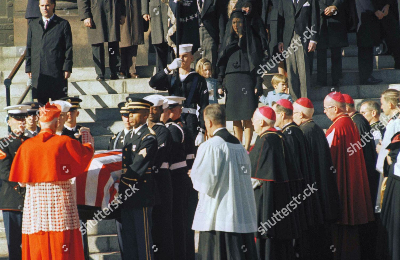
The funeral of President John F. Kennedy

Preparing to Return to Philadelphia

   A week or so after Kennedy’s visit, I defended my dissertation and was awarded my Doctor’s degree.  It was time to go home.  Bill Leahy and I booked passage on the S. S. Independence.  (He would return again for the remaining council sessions.)  Just before we left, our classmates warned us.  “You two are thinking of going home to Philadelphia and talking about the “New Pentecost.”  You know what’s going to happen to you?  The same thing that happened to St. Paul when he came to Rome.  You’re going to get your heads chopped off.”  
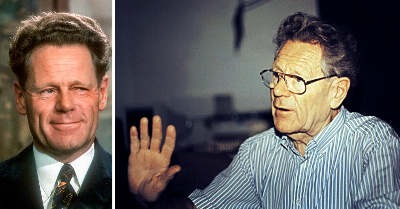
Hans Kung

   We laughed.  But we shouldn’t have.  This wasn’t the first time we were warned.  During the council’s first session, Bill Leahy had invited theologian/peritus Hans Kung to the graduate house for an informal talk session.  I clearly remember the contrast between his rugged features and twinkling eyes.  Even more so, I remember my naive surprise to hear him criticize the Curia.  He noted that the Curia was upset because they were losing control of the council.  Wishing they had more time to ensure their control, they were now complaining that the council was being held too soon.  Kung smiled and said, “My response is that the council is being held 400 years too late.”  

  He went on to say that we should not force the Protestants to give up their beliefs and principles for the sake of reunion with Rome.  It’s too much to ask people to give up principles they firmly believe in.  The way to reunion was not a return to Rome but a return to Christ.  “I say to the Protestants, ‘You come closer to Christ your way, and we’ll come closer to Christ our way.  Some day we’ll meet in Christ.” 

  The next day, Bill Leahy suggested that I write an article on what Kung had said.  I did so and then brought it to the place where Archbishop Krol was staying, to get his prior approval before sending it for possible publication somewhere.  He wasn’t there so I left the article.  The next morning, Krol was in the pulpit making the announcements that opened each council session.  When he finished, he called me over and said, “We’re going to lunch.”

  A little after noon, Krol and I walked out of St. Peter’s, turned left through the Bernini colonnade and found a little trattoria.  As we started to eat, he said, “I read your article.  First of all, there is nothing new happening at the council.”  I thought of Cardinal Ottaviani’s coat of arms, which contains the words, “Semper Idem,” Always the Same.  “And,” Krol continued, “there are no arguments going on.  Everything is going along well.  There are no disagreements at the council.  
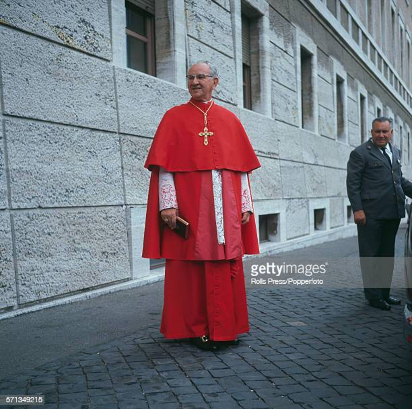
Cardinal John Krol, Archbishop of Philadelphia

  Naively, I protested, “But there are disagreements.  The church is going to change and the people back home should be prepared for the changes.”

  Krol would have none of it.  “The church is one.  After the council the church will still be the same as it was before.  And I don’t want you having anything to do with this Hans Kung or any others who are stirring up dissention.  When you get back to Philadelphia, I don’t want you telling people that there are disagreements.  I want you to present the church just as the authorities say it is.”

  Back at the graduate house I told Leahy what had happened.  He said, “Well, know we know for sure where we stand.  We’re alone.”  

  Years later, I told this story to the National Catholic Reporter and it was included in an extensive report on the Archdiocese of Philadelphia.  I ended my story by saying that the only good thing that happened that day was that Krol paid for my lunch.

   So here we were, being warned again.  Nevertheless, we were going home with high hopes.

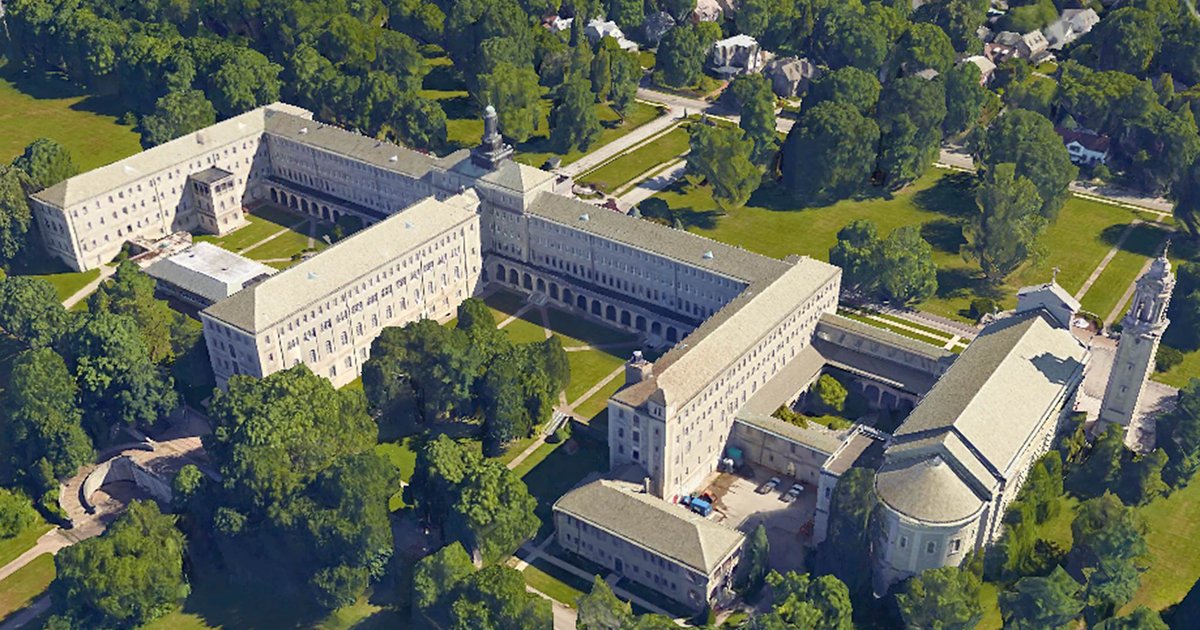
Both Fr. Leahy and Fr. Massimini were assigned to the seminary as professors.
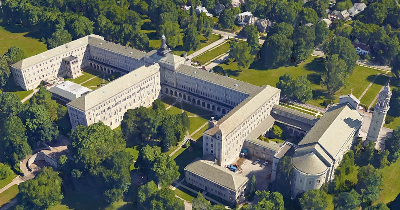
 

St. Charles Borromeo Seminary, Philadelphia, Pa

Dr. Anthony Massimini, Ph.D.

Ordained for Archdiocese of Philadelphia, Rome, 1959

Attended first session of Vatican II, 1962 

Dispensed by Pope Paul VI in 1971 and returned to the laity

Married in a Catholic ceremony, 1972

Editor and Translator: Council Speeches, Third Session of  Vatican II, with William K. Leahy

Author:  The New Dance of Christ–Discovering Our Spiritual Self in a New,  Evolving World, Xlibris Publishers, 2000  
Posted in Church History, Ecclesiology | Leave a comment

Vatican Council II: An Insider’s Diary

My Time at the Council Part 2  The Council in session

by Anthony, Massimini , Ph.D.


Progressives vs. Conservatives

   On October 13, 1962, Vatican II started its official work.  The day was short and dramatic.

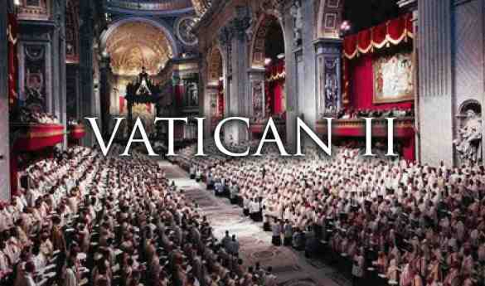
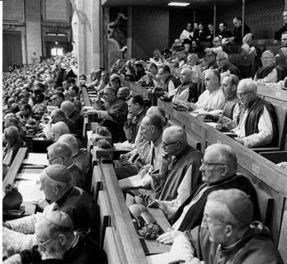
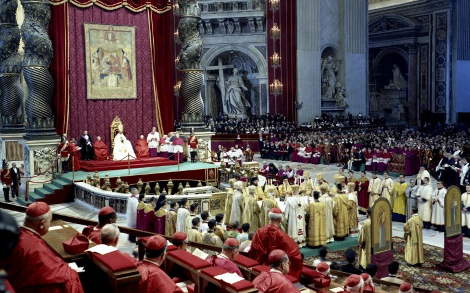
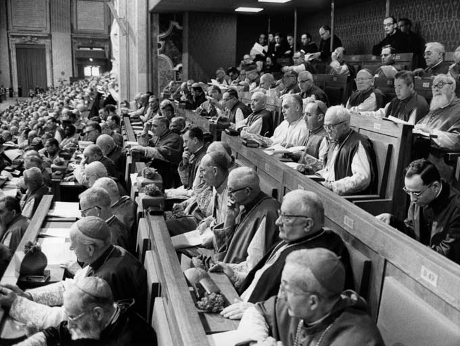
The council fathers took their assigned places in the “grandstands” that ran the length of St. Peter’s, facing each other across the marble floor like the stands of a football stadium.

But where was Pope John XXIII?  Word quickly got around that the pope was in his apartment watching the council on closed-circuit TV.  His message to the council fathers was clear:  it’s your church, do something about it, and then report back to me.    

   The session started with a Mass, as it would every day thereafter. Council fathers then took turns making announcements in the various languages of the world.  One of them was my archbishop, John Krol, of Philadelphia.  One morning, while he was standing in the pulpit, which stood at the altar-end of the grandstands, I happened to walk by in front of him.  He looked down and gestured, “Look at me, I can’t believe I’m up here at this momentous event.”

   The fathers had been provided with documents, one of which had spaces for them to vote for members of the council’s commissions, whose highly influential job it would be to move the council debates forward toward passage of the council documents.  The papers also contained the names of council fathers who had served on the preparatory committees.  Most of them were members of the Curia or Curia followers.  The fathers were asked to start voting.  Immediately, the “progressives” started spreading the word that the list and the rush to vote smacked of a conspiracy.

The fathers had been provided with documents.

   Some fathers obediently started to vote but stopped when a voice came over the speakers.  Cardinal Lienart of Lille, France, was calling for a delay in the vote so the fathers could inform themselves of the best candidates for the commissions, meaning, of course, other than those listed.  Cardinal Frings, of Cologne, quickly supported Lienart.  Despite the council rules that no public displays were permitted, applause broke out from what was to become the progressive majority.  Cardinal Tisserant, the presider for the day, instead of quieting the applause, announced that the proposal had been accepted and the council would adjourn for three days to allow the fathers to inform themselves. The first meeting had taken 50 minutes.  That day, the Holy Spirit spoke abruptly!

   Throughout the next three days, the fathers met, got to know one another, discussed, argued and politicked.     

   Then the Spirit laughed.  When the fathers finally did vote, I joined the other council assistants and tried to decipher the handwriting of 2500 men from all over the world who wrote thousands of names into little spaces.  Finally, the commissions were set up, with members from “both sides.”  The council was ready to take up its first order of business, the liturgy.

A Theologians’ Council

   The council fathers had been given the preparatory commission’s document on the liturgy and they now had the opportunity to speak–for ten minutes–and propose additions, changes, etc.  It quickly became clear that many of the fathers could not understand the spoken Latin.  Business at the two coffee bars under the stands became brisk.  The main work of the council took place in small meetings held in the afternoons and evenings.

   It was at these meetings that the theologians made their influence felt.  Many of them had been suppressed and silenced for trying to bring the church into the 20th century.  Pope John XXIII invited them to participate in the council.  They included Karl Rahner, Edward Schillebeeckx, Yves Congar, and Jean Danielou.  Later, American Jesuit John Courtney Murray, who had also been silenced, was invited.  He played a major role in forming the council’s document on religious liberty, based in part on the American experience with freedom of religion.

Some American Politics

   Two occasions during the Liturgy debate especially mark my memory.  

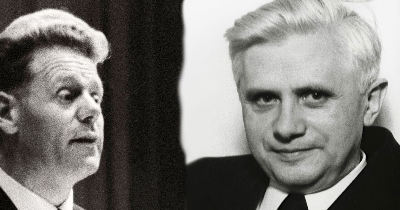
One.  Archbishop Paul Hallinan of Atlanta, presided over one of the sub-committees working on the vernacular for the liturgy.  He was a progressive, who befriended progressives like young Hans Kung, who served as a theological expert for the German bishops, (along with another young progressive, Joseph Ratzinger), and Cardinal Leo Seunens, a leading advocate for aggiornamento, ecumenism and dialogue with the everyday world.  Hallinan’s sub-committee was scheduled to take an important vote that afternoon, and he wanted to make sure he had the progressive votes in hand before the meeting took place.

   He handed me a list containing the names of 13 bishops on his committee and said, “Find out where they’re sitting and get them to sign this paper.”   He smiled and added, “Just a little old American politicking.”  I went to the computer room under the grandstands and got a technician to print out the locations.  Then I went out into the basilica and started making the rounds–up and down the aisles, here and there.  Very quickly, the council fathers began to follow me, noting where I was going and to whom I was handing the paper.  I found my targets and got the signatures.  That afternoon, Hallinan got his vote.  The next morning, the announcers announced in all the languages of the world, “Would the assistants refrain from moving among the council fathers during the session.”  In all the history of the 21 ecumenical councils of the church, I wonder how many assistants had announcements directly personally at them!

The African Mass

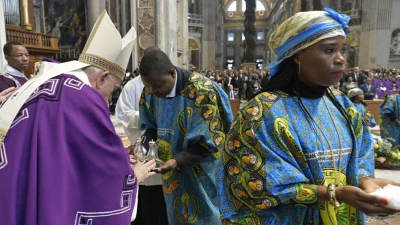
   Two:  At first, the Mass that opened each session was a Latin Mass.  Then a few Eastern Rite Masses were celebrated.  All were celebrated at the main altar.  One morning, a small, plain altar was set up in the middle of the basilica, on the floor between the facing grandstands.  Directly behind it was arranged a semi-circle of plain benches.  An announcer said in Latin that an African Rite Mass would be celebrated.

   The massive doors of the basilica opened and a double row of very tall, either Watusi or Masai men started walking in.  They were wearing floor length, flowing white robes with very short sleeves, so that their black arms formed a stark contrast with their robes.  They carried drums of various sizes.  Behind them came three priests, wearing vestments that reflected every color of the rainbow.

    They entered silently.  The white robed men sat on the benches.  For another moment or so, more silence.  Pregnant silence.  Then, ever so very softly, a slow, rhythmic, sound caught everyone’s attention.  The beat was very soft and very far away.  As far away as Africa.  As rhythmic as the heartbeat of Africa itself.  Slowly, hypnotically, the beat continued.  Then it grew louder.  The pace quickened and the rhythm grew more and more intense.  Everyone in the basilica not only heard it but felt it.  The fathers’ feet began to move and tap along with the rhythm.  Then their bodies joined in and they began to move rhythmically in their seats.  Some caught themselves and laughed in embarrassment.  Most just went with the beat. 

   The celebrant began praying in his own language.  Behind him, the men became a chorus and chanted in soft accompaniment as they continued beating their drums.  Mesmerized, the fathers’ followed the Mass.  When the time came for the Gospel, one priest changed the Missal from one side of the altar to the other.  The chorus rose, and as the celebrant chanted the Gospel, they danced around the altar, chanting and beating their drums.  The announcer said, “Behold the joy of Africa at having received the Good News of Jesus Christ!”  At that, the almost 2200 council fathers began to applaud and cheer.

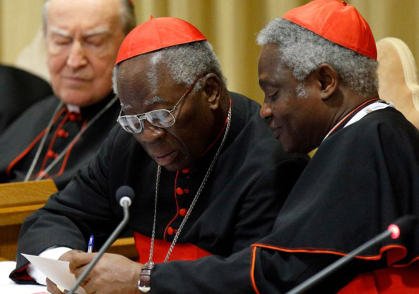
   I remembered hearing an African Cardinal, who spoke to a group of us before the council started.  He said, “We Africans have come to Rome to say, ‘Stop building your Gothic cathedrals in the middle of our jungles!  We have our own churches and our own way of praying!'”

   Despite the reluctance of the traditionalists, the liturgy document was accepted, 2147 to 4.

Truth Speaks to Power

  Every Monday afternoon, the American bishops met at the North American College on the Janiculum Hill to hear an expert bring them up to date on theology and Scripture studies.  The Janiculum, one of Rome’s seven hills, rises immediately to the south of St. Peter’s Square.  The College, which is the residence for American seminarians, was built just after World War II, and is a modern, stone and glass monument to America.  

  One Monday, a Scripture scholar was scheduled to speak, and Bill Leahy, who was in the process of becoming a Scripture scholar himself, decided that he and I should go listen to him.  I objected that it was not our place to be there.  Bill disagreed, arguing that we were an official part of Vatican II, albeit a minor part.  So we went.  Having lived there ourselves for four years, we knew how to safely sneak upstairs into the balcony of the auditorium.

   On the stage a Scripture scholar, dressed in a monk’s robe, addressed the bishops.  I believe it was Raymond Brown, but I’m not sure.  He was explaining that the Gospels were written decades after Jesus’s death and were edited versions of the young Christian faith.  In fact, he pointed out, we did not have the exact words that Jesus used at the Last Supper when he instituted the Eucharist.  

  The bishops were shocked.  “You mean we don’t say the same words that Jesus said, when we say Mass?” one asked.  “Well, no,” the scholar answered, no doubt smiling to himself since Jesus had spoken Aramaic. As the scholar continued with his explanation, we heard loud footsteps.  Someone had entered the auditorium and was walking up the aisle toward the stage.    

   The scholar stopped speaking.  Then a strong, loud voice.  “Father, you should not be saying such things!  You should not be teaching the fathers in this way!”  

   Bill and I leaned forward to see who was speaking.  It was a Cardinal, possibly Giovanni Amleto Cicognani, who had been Apostolic Delegate to the U. S.  But we couldn’t be sure because we leaned back as quickly and quietly as we could and tried to make ourselves invisible. 

   There was dead silence in the auditorium.  Then another voice.  One of the bishops, speaking with a clear, mid-western twang, said, “Well, Fathers, we came here to here the truth.  I think we should hear the truth.”  Then another voice, “Yes, let’s hear the truth.”  And another.  Then applause.  

   Footsteps again, as the Cardinal walked back out of the auditorium.  Then one more voice, “Father, would you please continue.”  The speaker continued.

   Bill and I looked at each other.  Power had spoken to truth, and truth had spoken back to power.  We smiled, more inspired than ever at what Vatican II was bringing about.      

A Council of Everyday Spirituality

   The theologians whom John XXIII invited to Vatican II brought with them not only a 20th century view of theology but also of philosophy.  That philosophy was called Phenomenology.  In short, it focuses on our everyday experience in deciding what is real and true and right.  Psychology similarly speaks of raising consciousness.  

   The theologians brought this way of thinking into the council’s teaching in order to fulfill John’s instruction that the council explain our living faith pastorally, i.e., in terms of people’s everyday lives and the changing signs of the times.  The traditionalists strongly opposed this approach, preferring to focus on abstract, unchangeable teachings–and on their power to keep the teachings from changing.

   But experiences do change, and church teaching has changed as a result of new experiences.  It took over 1800 years, but the everyday experience of dire suffering by slaves finally made Christians officially realize that owning people was wrong.  Their raised consciousness moved them to change our moral teaching on slavery 180 degrees.  Experience also moved Christians to change the moral teaching on charging interest on loans.  On the crusades.  The Inquisition.  Anti-Semitism.  Racial segregation in American churches and schools.  Today, our consciousness is rising concerning just war and capital punishment, women’s rights and gay rights.  The Internet, Twitter, smart phones, etc., permit us to communicate with the world in an instant.  We are becoming increasingly aware of the inter-connectedness and inter-dependence of all people and things.  As a result of all these experiences and more, our experience of ourselves and of God is changing.  In sum, we are evolving, and our faith and moral judgments need to evolve with us.  

   Vatican II saw this coming and said that the human race is involved in a new stage of history. (Church in the Modern World, CMW, No. 4).  Cosmologist/mystic, Brian Swimme says we can now reinvent the human.  Theologian Elizabeth Johnson beautifully presents some of today’s experiences of God in her excellent book, Quest for a Living God.  (The bishops’ complaint is that she did not use the traditional approach to understanding God.)  Ilia Delio, O. S. F. writes of the evolving Christ.  Here we should give a special “shout out” to our American Religious Women, who are wondrously showing the beautiful features of the American face of Christ.  

   Vatican II wanted us to catch up to the Modern World, by which it meant, “today’s world”. We are now in what we call the Post-Modern World.  And in many ways, we are farther behind than before.  For one thing, the everyday experience of priests and bishops is not the same as that of the laity.  The immediate, direct discernment of God’s presence and intentions in the give and take of today’s world is up to the laity.  And so the initiative for coming up to date and expressing Christ in 21st century, American terms within our living, evolving faith, is very much up to the laity.

   Our society and culture are suffering.  People are suffering.  Waiting is not an option.     


Dr. Anthony Massimini, Ph.D.

Ordained for Archdiocese of Philadelphia, Rome, 1959

Attended first session of Vatican II, 1962 

Dispensed by Pope Paul VI in 1971 and returned to the laity

Married in a Catholic ceremony, 1972

Editor and Translator: Council Speeches, Third Session of  Vatican II, with William K. Leahy

Author:  The New Dance of Christ–Discovering Our Spiritual Self in a New,  Evolving World, Xlibris Publishers, 2000  
Posted in Church History, Ecclesiology | Leave a comment

Vatican Council II: An Insider’s Diary

My Time at the Council Part 1 by Anthony, Massimini , Ph.D.

Announcing the Council

     In 1959, when Pope John XXIII announced to a meeting of cardinals in Rome that he wanted to call an ecumenical council, he was met with cool silence.  The cardinals, and later the Vatican Curia, the pope’s “cabinet,” saw no need for a council.  The Protestant Reformers had attacked the papacy and the sacraments and the Council of Trent in the 16th century had fortified the notion of sacraments, and of the monarchical papacy and the central church institution.  In 1870, at the First Vatican Council, the church had defined the infallibility of the pope.  To the Vatican insiders, all possible questions had been settled.  The pope was infallible, and in various ways they had begun to spread the pope’s infallibility to include themselves.

Turmoil in Rome

   But in Rome, the years immediately before the council were tumultuous.  Throughout the 19th century, especially because the French Revolution and the Enlightenment had attacked and even ridiculed the faith and said that reason alone would save the world, various popes had condemned democracy, freedom of the press, the separation of church and state, religious freedom, and the modern world in general.  The Curia had suppressed just about every theologian who was trying to bring the church into the 20th century.  Catholic Scripture scholars were still teaching that stories like the six days of creation were literally true.

   In 1948, Pope Pius XII wrote an encyclical, Divino Afflante Spiritu, that permitted the Scripture scholars to use modern methods to understand the Bible.  At the Pontifical Biblical Institute in Rome, the Jesuit scholars began to teach this new understanding.  But in 1958, when Pius XII died, and Pope John XXIII was elected, the Curia fired the two leading Jesuit scholars.

Learning Teilhard de Chardin’s Views in Secret

   In 1962, I was studying for my Doctor’s degree in Spirituality at the Pontifical Gregorian University, across the street from the Biblical Institute.  In those days, our professors lectured in Latin and we spoke to them in Latin.  One day a professor began teaching us a new spirituality that began with the first flaring forth of the universe, and then continued through the evolution of the universe to the birth of the earth and life on earth and then to the rise of humans, the birth of the mind and our evolutionary progress toward an Omega point of love.  He spoke very fast and I could not keep up with him as I tried to take notes.  I asked a Jesuit in the class to ask him to give us notes and reading material. He went and asked him privately.  But the professor refused, saying he was afraid somebody would take his notes to the Vatican, and the Curia would fire him, as they had fired the Scripture scholars. It was not approved in those days to even mention the name of Teilhard de Chardin, the Jesuit scientist and mystic.

John XXIII’s Personal Turmoil

  Later in 1962, just before Vatican II began, our Archbishop from Philadelphia, John Krol, came to Rome to see the pope.  Before he went to the Vatican, he came to the graduate house of the North American College*, on Humility Street, one block from the Trevi fountain, where we lived, and picked up my Philadelphia classmate,  Fr. Bill Leahy.  Together they went to the Vatican, and met the pope in his private study.  (During a prior visit to Rome, Krol had taken me with him to see the pope.)

    *(In Latin, our country is called North America)

  Pope John, jolly and gracious as always, greeted Bill and asked him what he was studying. When Bill answered in Italian, “Sacred Scripture, Holy Father,” John instantly became upset, to the point where he almost started crying.  “Oh my!  What are they teaching you over there? [at the Pontifical Biblical Institute where the professors had been fired.]  What are they doing?  They took away Adam and Eve!  Now they’re taking away the Magi!  What are we going to teach the children?!”

   Bill was shocked into silence.  When he and Krol left, Krol said to him, “Did you hear what the Holy Father said?!  I don’t want you studying those things or teaching those things.”  Bill had no answer.  The Curia had not only fired the professors; they had also influenced the Pope against the Institute.  How could Bill not study what he was being taught?

  When he returned to the graduate house, he told me what had happened.  Then he mentioned what I was being taught in secret, and added, “We have to choose what side we’re going to be on.  Either we will learn what we’re being taught and teach it when we get home, or we will suppress everything we’re learning and do nothing.”  With palpable trepidation, we decided to move ahead with our studies.

The Council Begins

  Then, in October, 1962, Vatican II opened.  Fr. Bill Leahy and I were in St. Peter’s for the historic day: Bill as a secretary or scribe, who would record the Council fathers’ speeches, and I as an assistant to the Council fathers.  We were there to hear Pope John XXIII give his now famous speech.  It included: 

          In the daily exercise of our pastoral office, we sometimes have to listen,  much to our regret, to voices of persons who, though burning with zeal, are not endowed with too much sense of discretion or measure.  In these modern times they can see nothing but prevarication and ruin.  They say that our era, in comparison with the past eras, is getting worse, and they behave as though they have learned nothing from history, which is, nonetheless, the teacher of life.  They behave as though at the time of former Councils everything was a full triumph for the Christian idea of life and for proper religious liberty. We feel we must disagree with these prophets of gloom, who are always forecasting disaster, as though the end of the world were at hand.

   He then went on to say that we must open the windows of the church and let the Spirit fly in.

    Bill and I remembered how the pope had been so upset, and how I was being taught in secret.  John had changed!  He was now opening windows and letting in fresh air!  It was all right for us to learn what we were being taught.  It was all right for us to return to Philadelphia with the good news of a new era for the church!  Or so we thought.

The Division Begins

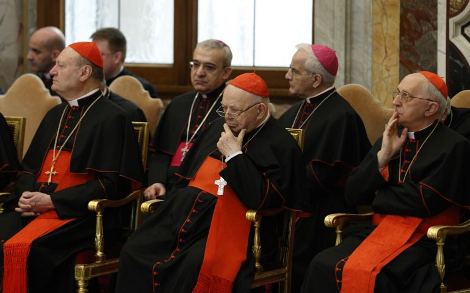
   At the graduate house the mood was tense.  Because so many American bishops and theologians were alumni of the North American College, it was often referred to as the “West Point of the church.”  At the time of Vatican II, young priests at the graduate house included Now Bishop Tom Gumbleton, Now retired Cardinal Justin Rigali, (Phila.), Rev. Charles Curran (fired from Catholic U., now at S.M.U.), Dr. Anthony Padovano (author, married. Founder of CORPUS, for married priests), Dr. Daniel Maguire (fired from Catholic U., Married and now at Marquette), Now retired Bishop Richard Sklba (Milwaukee), Fr. Val Peter (retired Director, Boys & Girls Town, Nebraska), Peter Kearney, Scripture Scholar (married).

   When news of Pope John’s speech hit the priests on Humility Street, we all began to take sides.  The College felt like West Point at the start of the Civil War.

Resistance from the Curia

   The Vatican Curia did not want the council.  In the five volume history of Vatican II recently published, author Carlo Falconi writes a section on the various factions existing in the church in 1962.  

   He calls one faction, The Zealots, members of the Curia who believed that they were the “remnants of Israel,” i.e., the minority that was the trustee and interpreter of God’s will.  Their

agenda for the council consisted of these points:

–prevent any lessening of papal prerogatives

   –avoid a reform of the Curia itself

   –check any increase of the power of the bishops.  

   –be on guard against collegiality, which they saw as a attack on the authority of the Curia.  If the bishops had a share in church government, the pope would have to respect their input and therefore would no longer have real primacy over the whole church

   –resist any meddling by the laity

   –moderate and gradually apply reforms of any kind

   –zeal for the proper and precise formulation of doctrine, specifically its scholastic formulation [the abstract formulations of scholastic theology.] This opposed the desire of John XXIII for a council that would present doctrine pastorally, i.e., in a way the laity and the world at large could understand.

   –an “essentialism,” i.e., the predominance of abstract thinking.  [My addition: without considering everyday experience]

   –a deep appreciation of tradition [my addition: without considering the development and evolution of insight into our faith]

   –the definitive and final importance of the Magisterium [my addition: without considering the importance of theologians and the discernment of the laity in forming the Magisterium]

   –an ahistoric triumphalism that led them to maintain, “as a cardinal rule, the Curia never acknowledges faults, at least not publicly.”

   –an individualism that was seen in their defense of the private celebration of Mass       

   –extreme Papalism, i.e., an intransigent defense of the rights or intangible privileges of the Holy See, which in many cases were simply the rights and privileges of the Curia.

   When the council was in session, Fr. Bill Leahy was working at the Vatican, carrying out his duties as a scribe.  Some of the Curia members around him were talking without fear of who was listening, saying that when the Council Fathers went home, they, the Curia, were going to take back the church.

   If we want to know why the council has never been fully or effectively implemented, especially in its teachings on the full participation of the laity, the collegiality of the bishops, and a true updating of church teaching, with respect for the experience of the People of God, the Curia’s agenda gives the answer.  It also helps explain the regressive new translation of the Liturgy.  In a very important way, it really made no difference what the council was voting on.  Pope Paul VI, who succeeded John XXIII, wanted the largest positive vote possible on every document.  The Curia and their allies gave it to him, knowing that they were going to hold everything back.

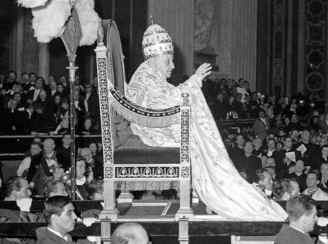
   Pope John XXIII knew that this agenda was in jeopardy.  I believe that is why, on the opening day of the council, when he entered St. Peter’s, carried aloft on the sedia gestatoria, he was crying so hard that the tears were clearly running down his face. The leader of the Curia, and of his opposition, was Cardinal Ottaviani. Gary Wills wrote that when John gave his opening speech, he was looking directly at Ottaviani, as if to say, O. K. Now what are you going to about it.”  As I described above, he got his answer.

 Catching up to God in Today’s World

   Pope John XXIII is reported to have said that there is a difference between what we believe and how we say what we believe.  Our faith is transcendent.  When it enters into human form it can be expressed with a trustworthy degree of certainty, yet it can never be fully understood and expressed, be it in creeds, dogmas, psalms, hymns, literature, art, church architecture, liturgical formulas, etc.  

   John focused on the historical dimension.  St. Francis of Assisi was a “nature mystic,” he saw God’s presence and intentions in the sun and moon, birds and animals.  John XXIII was a “history mystic.”  He saw God’s presence and intentions in history.  In different times God is understood and expressed in different ways.  For example, the Old Testament expressions of God are different from the Gospels, which were further expressed in the philosophical expressions of the early councils, e.,g., “consubstantial.  St. Augustine used Platonic thinking as a “template” for the Gospel; St. Thomas Aquinas used Aristotle, which begot scholastic philosophy and theology.  Later, in reaction to the Reformation, the Council of Trent took a tone of “triumphalism,” saying that the Catholic Church had the truth and if anyone disagreed with its teachings, Anathema sit!, which is a fancy way of saying, “Let him go to hell!”

   In the 1960’s John wanted the faith expressed in terms of the new era that was dawning, with its new challenges and opportunities.  He wanted aggiornamento, i.e., he wanted the church to “catch up” to the modern world and meet its challenges and opportunities.  He wanted the church to re-envision and reform herself (the council did so, as the “People of God”), to find peace with the Protestants and Jews, and even people of other faiths and no faith, and enter into a healthy, spirit-filled, humble, listening-learning-teaching dialogue with the everyday world.

          … ‘The church has always had the duty of scrutinizing the signs of the times and of interpreting them in the light of the Gospel.  Thus, in language intelligible to each generation, she can respond to the perennial questions which people ask about this present life and the life to come, and about the relationships of one to the other.  We must therefore recognize and understand the world in which we live, its explanations, its longings, and its often dramatic characteristics…..Today, the human race is involved in a new stage of history. ‘

                                                                            The Church in the Modern World, No. 4

Dr. Anthony Massimini, Ph.D.

Ordained for Archdiocese of Philadelphia, Rome, 1959

Attended first session of Vatican II, 1962 

Dispensed by Pope Paul VI in 1971 and returned to the laity


Married in a Catholic ceremony, 1972

Editor and Translator: Council Speeches, Third Session of  Vatican II, with William K. Leahy

 
Author:  The New Dance of Christ–Discovering Our Spiritual Self in a New,  Evolving WorldXlibris Publishers, 2000  
Posted in Church History | Leave a comment

Traveling Back in Time to Learn Our Beginnings

Leadership in the First Century Christian Church

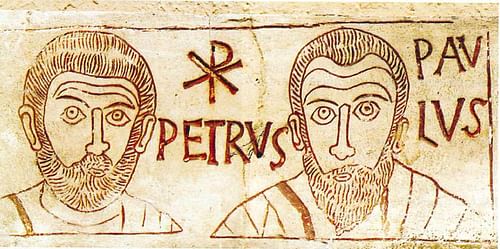
Two early leaders of the Church

B A JOHNSON

Introduction

After Jesus Christ’s ascension, earthly authority over his church fell first and foremost to the eleven remaining of his closest disciple, Matthias – the replacement chosen for Judas of Iscariot – and James the brother of Jesus who was appointed head of the church at Jerusalem1. Paul, after his dramatic conversion, quickly became a leader of the church as well, and was confirmed by James, Peter, and John as an apostle to the gentiles2. But as the church grew, and news of Christ’s death and resurrection spread far and wide, it was clear that leaders would have to be appointed among the churches of every city to teach, admonish, and care for the needs of those growing congregations. To this aim, the apostles (and doubtless others as well) appointed leaders in the churches, and further delegated the task of appointing such men to others whose faith and character they deemed to be worthy of such trust3. So, by at least the middle of the first century, the basics functions of an episcopal leadership had been established.

Although there were many varied functions carried out by a number of members in the early church*, the basic leadership structure seems to have fallen into three categories: apostles, elders, and deacons.

Apostles

The term “Apostle” (apostolos) literally denotes a messenger or one who is sent by another, but in the early church it took on a new significance – that of one who was sent by Jesus Christ. This term was used to varying levels of exclusivity, at times only denoting the original eleven disciples and Matthias, while others, such as Paul, use the term more broadly to include other preeminent leaders in the church such as James the brother of Jesus4 and himself. As Paul frequently referred to himself as “Apostle” in his writings, there can be little doubt that he was generally included in this elite group.

The Apostles were the preeminent authorities of the early church after Christ. It was the apostles who appointed the first elders, instructed them in doctrine and conduct, and whose writings were paired with scripture5. Even after the Apostles had departed a region – indeed even after the last of the apostles had passed away – the station of apostle remained unique to them, as did the authority of their teachings.

Elders

Acts 15’s meeting of the Jerusalem council is often used to explain that Christians/non-Jews are not required to keep the law of God. 

Several terms were used to denote those men appointed as leaders over the local churches. Although here they will be referred to simply as “Elders,” they were alternately called “overseer” (episkopos), “shepherd” (Poimen), and Elder (presbuteros)+. These terms were used synonymously without any distinction drawn between them. The term “presbuteros” can also be translated simply as “presbyter,” and Poimen (shepherd) has also come to us as “pastor” (from the Latin, Pastorem). Episkopos, through a later etymology, is also rendered “bishop.”

As mentioned before, the Elders were appointed to provide leadership and guidance to the local churches in the absence of the Apostles. As the number of Apostles dwindled and those who remained knew their time was short, they entrusted care of the churches fully in the hands of these Elders, admonishing them to remember the doctrine they had been taught and to hold fast to it in the face of new trials and innovative heresies6.

The duties of elders were undoubtedly many and varied, but the most important of these duties were the instruction of sound doctrine7, exercising oversight over and setting an example to the congregation8, acting as a bulwark against false teachings and dissention9, and praying over those in need among the believers in their charge10.

Deacons

The First 7 deacons

Directly subordinate to the Elders was the “deacon.” (diakonos; a servant who carries out the command of another). The deacons were tasked with assisting the Elders in their duties, which allowed them to provide better care for the flock while focusing on the most important duties of an Elder^.

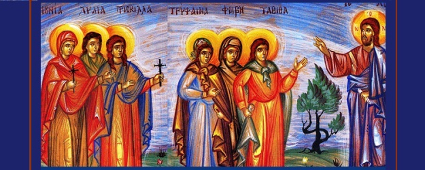
First Christian Deaconesses (left to right): Ionia, Lydia, Priscilla, Tryphena, Phoebe, and Tabitha painting by Kostas Xenopoulos

Qualifications For Elders and Deacons

The position of Elder and deacon alike was a position of great responsibility. As such, much was required of a candidate for these posts.

A candidate for Elder or deacon was to be “above reproach,” a faithful believer for some time, and with a wife and children of similarly high regard. New converts were not eligible for either of these roles11.

Only men could serve as Elders of a church12. It is possible, though not certain, that some women may have served as deaconesses in the church, though the exact nature of this role is not clear13.

The Evolving Episcopate

It is interesting to note that the first elders almost certainly did not hold sole authority over a local church. Rather, it seems the local churches were instead each governed by a college of elders. This can be seen in the Acts of the Apostles, where a council of elders is described in Ephesus and a number of elders was found along with the apostles in Jerusalem14. Similarly, in his letter to the Philippians, Paul refers to multiple overseers at that church15. Indeed, there is no example in the New Testament writings were any church is explicitly said to have only one Elder, rather all seem to have had a plurality.

Early Church Bishops

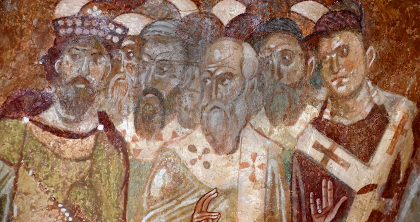
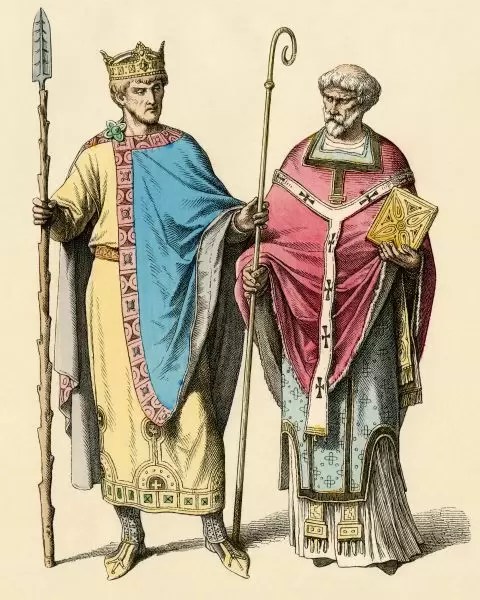
From the writings of early second century elders such as Ignatius of Antioch and Polycarp, this situation seems to have changed drastically from the mid-late first century. Of Ignatius’ 7 letters, only one seems to indicate a city still ruled by a number of Elders**, and Polycarp is said to have been appointed as Elder over the church at Smyrna by John himself at the end of the first century16. Although this evolution should not be viewed as intrinsically negative, it did set the stage for the onset of an Imperial Church in the fourth century, where the humble servitude of the first elders was swallowed by the pomp and glory of a royal court in which richly adorned “bishops” vied for ever growing prestige.

Footnotes

* See 1 Corinthians 12

+ For example, episkopos is used in Titus 1:7, presbuteros in 1 Peter 5:1, and poimen in Ephesians 4:11

^ cf. Acts 6:2-4

** Ignatius’ Epistle to the Romans

1. Eusebius, Ecclesiastical History, Book 2, chapter 1

2. Galatians 2:9

3. Acts 14:23, Titus 1:5

4. Galatians 1:19

5. 2 Peter 3:16

6. Acts 20:17-38

7. Titus 1:9

8. 1 Peter 5:1-4

9. Acts 20, Titus 1

10. James 5:14

11. 1 Timothy 3

12. 1 Timothy 2:12

13. Romans 16:1

14. Acts 15, 20

15. Philippians 1:1

16. Irenaeus, “Agaisnt Heresies” Book III, (cited from Eusebius, Williamson translation, p. 167)

Posted in Newest Posts | Leave a comment

From Catholic Clericalism to Pharisaic Elitism

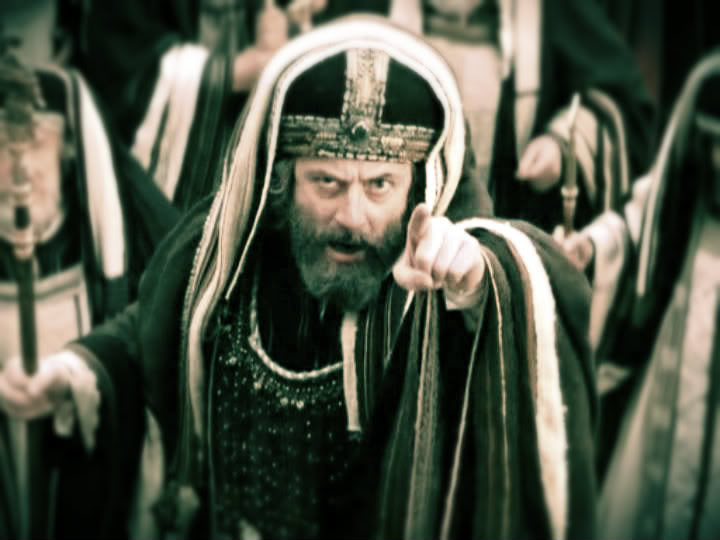
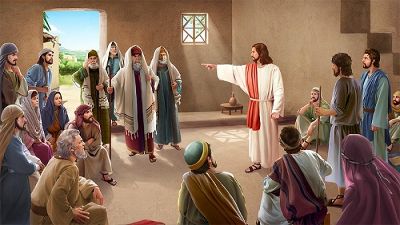
“Woe to you, scribes and Pharisees, hypocrites! For you tithe mint and dill and cumin, and have neglected the weightier matters of the law: justice and mercy and faithfulness. These you ought to have done, without neglecting the others. You blind guides, straining out a gnat and swallowing a camel!”

Deep-Pocketed Catholic Conservatives and Bishops  Reduce the Message of Jesus to Evangelization by Money and Moral Legalism

In 2017, Tom Roberts, then the Editor of the National Catholic Reporter wrote an editorial entitled Conservative donors aim to shape Catholic narrative for the wider culture

His focus was to show how money and church intertwined “into advocacy groups and think tanks that aim to influence church institutions and to shape the Catholic narrative for the wider culture. Fox uncovered ”a report detailing Knights of Columbus spending on conservative communications outlets, political think tanks, and advocacy groups.” 

See https://www.ncronline.org/news/accountability/knights-columbus-financial-forms-show-wealth-influence

Another example of how wealth is influencing Catholicism is the Napa Institute, an organization co-founded by Timothy Busch and his wife, that espouses a mix of conservative theology and libertarian economics. 

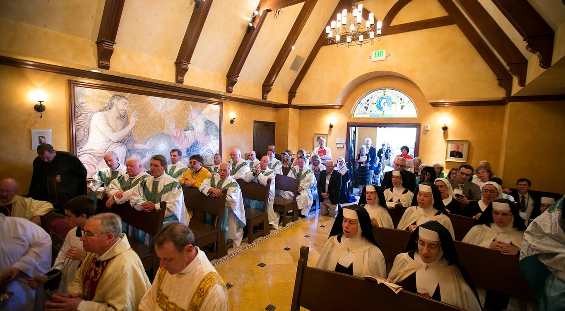
Participants of a Conference at the Napa Institute

Busch, the founder of the Busch Legal Firm, spoke at a Mass in 2017 that was celebrated by Cardinal Donald Wuerl at the Shrine of the Immaculate Conception in D.C. for the opening of a conference at the Catholic University of America business school that bears Busch’s name. “This very, very important time of our nation, said Busch… a time when many of us as Catholics saw it as a time of darkness and now we see a time of light. It may be a challenging light, but a time of light,” he said in an apparent reference to the transition in administrations from Barack Obama to Donald Trump. Busch said the assembly would pray for the nation, and added, “We will in the next day learn more in our hearts and our minds where this next term will take us, and we pray it will be for greatness to restore our country.”

This was the beginning of the Catholic Church’s support for the 45th president, Other such groups and foundations lending their support by contributing to the “evangelization of the American culture are: 

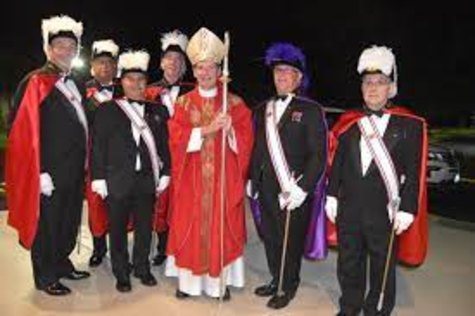
The Knights of Columbus

Napa Institute 

Legatus

Becket Fund for Religious Liberty, 

Catholic University’s Busch School of

Business and Economics

Courage

Ethics and Public Policy Center

Femm Foundation

Holy Family School of Faith

John Paul II Center for Women

Sophia Institute Press

Witherspoon Institute

“If Busch of the Napa Institute considers Catholic nonprofits a sign of church vitality and the real evangelizing corps in the church, Stephen Schneck, former director of Catholic University’s Institute for Policy Research & Catholic Studies, sees the surge in growth as often providing an alternative structure to the church.”

Fox continues, “When the USCCB’s  letter on the economy, Economic Justice for All  was issued, Schneck said, “pro-market conservatives like Bill Simon, Michael Novak, Richard Neuhaus and others began a systematic effort to create a sort of parallel to the bishops’ conference — an array of non-profit organizations, media, clerics and academics that could claim some legitimacy as alternative Catholic voices, but that also were authentically conservative in the America, pro-market, pro-military style.”

In addition to Simon, Schneck was referring to Novak, a scholar at the American Enterprise Institute and the author of numerous books on religion and culture. One of his best known is The Spirit of Democratic Capitalism. Novak died in February at age 83.

The network of organizations, however, is keeping his legacy alive. In 2016, Novak joined Catholic University’s Busch School of Business and Economics as a distinguished visiting fellow in the Arthur and Carlyse Ciocca Center for Principled Entrepreneurship.”

There is so much more contained in this editorial by Tom Fox. 

https://www.ncronline.org/print/news/accountability/conservative-donors-aim-shape-catholic-narrative-wider-culture

He concludes with comments by Stephen Schneck, former director of Catholic University’s Institute for Policy Research & Catholic Studies who says: “Deep-pocketed conservatives and their foundations were and remain very committed to funding these efforts at levels that cannot be matched by resources within the episcopacy,” said Schneck. Consequently, he added, the bishops are influenced by these organizations — “their academic and intellectual firepower, and their extensive media outreach.”

Schneck believes it is “increasingly difficult to identify the line between this conservative Catholic deployment of organizations and the official institutions of the church in America.”

SO, what we have here is the power, fame, and fortune that Jesus rejected at his great temptation in the desert, as the new evangelization of the Good News.

 Why do I call it Pharisaic Elitism? Well, let’s start with some definitions. Pharisaic= practicing or advocating strict observance of external forms and ceremonies of religion or conduct without regard to the spirit; self-righteous; hypocritical. Elitism= In political and sociological theory, the elite (French élite, from Latin eligere, to select or to sort out) are a small group of powerful people who hold a disproportionate amount of wealth, privilege, political power, or skill in a society. Defined by the Cambridge Dictionary, the “elite” are “those people or organizations that are considered the best or most powerful compared to others of a similar type.”

Since the Catholic Church has failed to influence the American culture with traditional evangelization utilizing preaching and catechesis, the next best way is the influence of power and fortune wrapped in the fame of entrepreneurs, media celebrities, and politicians even the likes of the former guy who was president from 2017 to 2021.

One caveat which is forgotten or ignored is that America is NOT a Christian or Catholic nation and never will be as long as We the People have any say. Maybe that’s why democracy appears to be giving way to autocracy!  These notable moguls and financiers believe that their holy vocation is to restore western civilization to what it was from the Middle Ages to the 20th century. They forget that those nations and empires failed, as did the patriarchy and authoritarianism of the Roman Catholic Church and that America was to be a nation free of religious influence. The ecumenism of Vatican II reminded us that there were other religions to be included in evangelizing the world to do God’s Will. America is an example of how these religions can live together in peace and harmony. Money and laws don’t bring about the Kingdom of God. Love, Compassion, empathy, forgiveness, and inclusion that leads to distributive justice do.

Shouldn’t the Magisterium remind itself and Catholics what Jesus said: “No one can serve two masters. Either you will hate the one and love the other, or you will be devoted to the one and despise the other. You cannot serve both God and money.” Mt 6:24

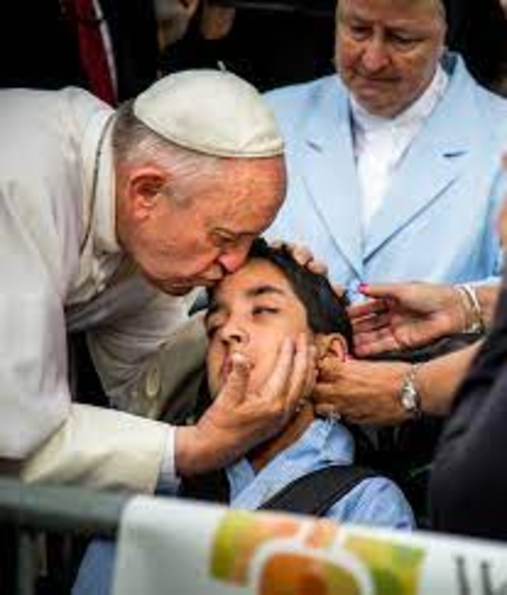
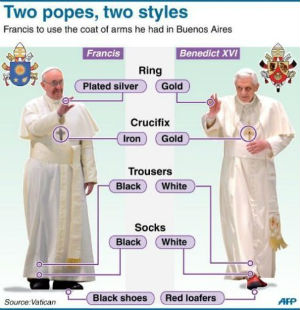
Pope Francis is trying to remind the Catholic Church of this but many of the hierarchy and conservative financiers are opposed to his “heretical” compassionate and non-judgmental attitude. Born Jorge Mario Bergoglio, worked for a time as a bouncer and a janitor as a young man before training to be a chemist and working as a technician in a food science laboratory. After recovering from a severe illness, he was inspired to join the Society of Jesus (the Jesuits) in 1958. As a local superior for the Jesuits in Argentina during a brutal dictatorship, he was caught in the middle of some members of his order, who were helping the poor protest the oppression, and the survival of the Jesuit order there. He was criticized for not confronting the power of the regime while trying to protect those priests from the torture and execution that was imminent if they continued to voice opposition to the regime. That would all result in the absence of anyone to help the poor with their basic needs. In other words, Pope Francis knew then that power can’t be used to bring about the Kingdom of God. “They don’t understand the complexity of Bergoglio’s position back then when things were so dangerous,” Cox, a former editor of the Buenos Aires Herald says. “They can’t see how difficult it was to operate under those circumstances.”

At this, the leaders sought to arrest Jesus, for they knew that He had spoken this parable against them. But fearing the crowd, they left Him and went away.

Paying Taxes to Caesar

(Matthew 22:15–22; Luke 20:19–26)

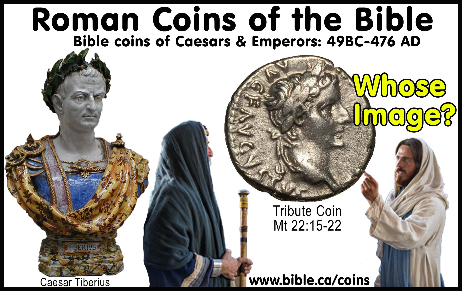
Later, they sent some of the Pharisees and Herodians to catch Jesus in His words. “Teacher,” they said, “we know that You are honest and seek favor from no one. Indeed, You are impartial and teach the way of God in accordance with the truth. Is it lawful to pay taxes to Caesar or not? Should we pay them or not?”

But Jesus saw through their hypocrisy and said, “Why are you testing Me? Bring Me a denarius to inspect.” So they brought it, and He asked them, “Whose image is this? And whose inscription?”

“Caesar’s,” they answered.

Then Jesus told them, “Give to Caesar what is Caesar’s, and to God what is God’s.” And they marveled at Him. Mk 12

Shortly after that, they asked him, What was the most important commandment. He responded: “Love the Lord your God with all your heart and with all your soul and with all your mind and with all your strength.’The second is this: ‘Love your neighbor as yourself.’ No other commandment is greater than these.”

“Right, Teacher,” the scribe replied. “You have stated correctly that God is One and there is no other but Him, and to love Him with all your heart and with all your understanding and with all your strength, and to love your neighbor as yourself, which is more important than all burnt offerings and sacrifices.”

When Jesus saw that the man had answered wisely, He said, “You are not far from the kingdom of God.” Mk 12

In other words, LOVE, not power, fame, or fortune, is the Way to the Kingdom of God.

In Matthew’s gospel, chapter 23, Jesus attempts to set the Pharisees straight. One of his warnings is this: “Woe to you, scribes and Pharisees, you hypocrites! You pay tithes of mint, dill, and cumin. But you have disregarded the weightier matters of the law: justice, mercy, and faithfulness. You should have practiced the latter, without neglecting the former. You blind guides! You strain out a gnat but swallow a camel. Mt 23:23

Catholic money, laws, and political influence may appear as solutions to the world’s and America’s problems, but it sure doesn’t measure up to the message of Jesus. The annual Napa Institute gatherings held at one of Busch’s California resorts regularly attracts leading conservative archbishops and cardinals from the U.S. and the Vatican. It is a gathering for those at the upper end of the economic spectrum, complete with gourmet dining, fine wines, and cigar smoking sessions. They must assume that they are doing the work of the Lord but remember what Jesus said, 

“Not everyone who says to me, ‘Lord, Lord,’ will enter the kingdom of heaven, but only the one who does the will of my Father who is in heaven. Mt 7:21

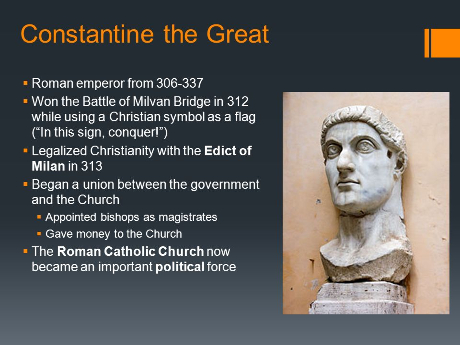
The final caveat is the fact that from the moment Constantine decided to make Chrisianity the religion of the Roman Empire, Catholicism was captured by the culture and power of empire after empire, country after country in Western Europe and now it is waning, even in America despite the “deep pockets” of Catholic Philanthropists who want the American culture to become Catholic.

“The Christian ideal has not been tried and found wanting.

It has been found difficult; and left untried.”

G.K. Chesterton, in What’s Wrong with the Worldl

Posted in Ecclesiology | Tagged | Leave a comment

A Rose by any Other Name – The New Catholic Inquisition

A new “god squad” made up of Catholic “Investigative Journalists” maybe the Modern Version of the Catholic Inquisition

Recently, it’s been reported that Monsignor Jeffrey Burrill, former general secretary of the U.S. bishops’ conference, announced his resignation Tuesday, after The Pillar, an investigative newsletter and podcast, found evidence that the priest engaged in serial sexual misconduct and reported it to the USCCB. Monsignor Burrill’s role was to oversee the Catholic Church’s response to the sexual abuse and misconduct scandals.

The Pillar, is a “Catholic” media project “aiming to serve the Church while pointing to Jesus Christ, who is the way, the truth, and the life.”, according to their website. “Our focus is on investigative journalism, which is how we’ll spend most of our time.” their description states.

It’s also been reported that the USCCB initially scheduled a meeting with The Pillar for Monday, July 19, but then canceled the meeting. The USCCB officials said it would only respond to written questions, which The Pillar offered them.

“We’re independent of any ecclesial agenda,” says the Pillar’s description on their website and “we won’t be afraid to tell the stories that need to be told, but we’ll tell them with integrity and fairness.”

“Our aim is serving the Church, and pointing to Jesus Christ, who is the way, the truth, and the life.” 

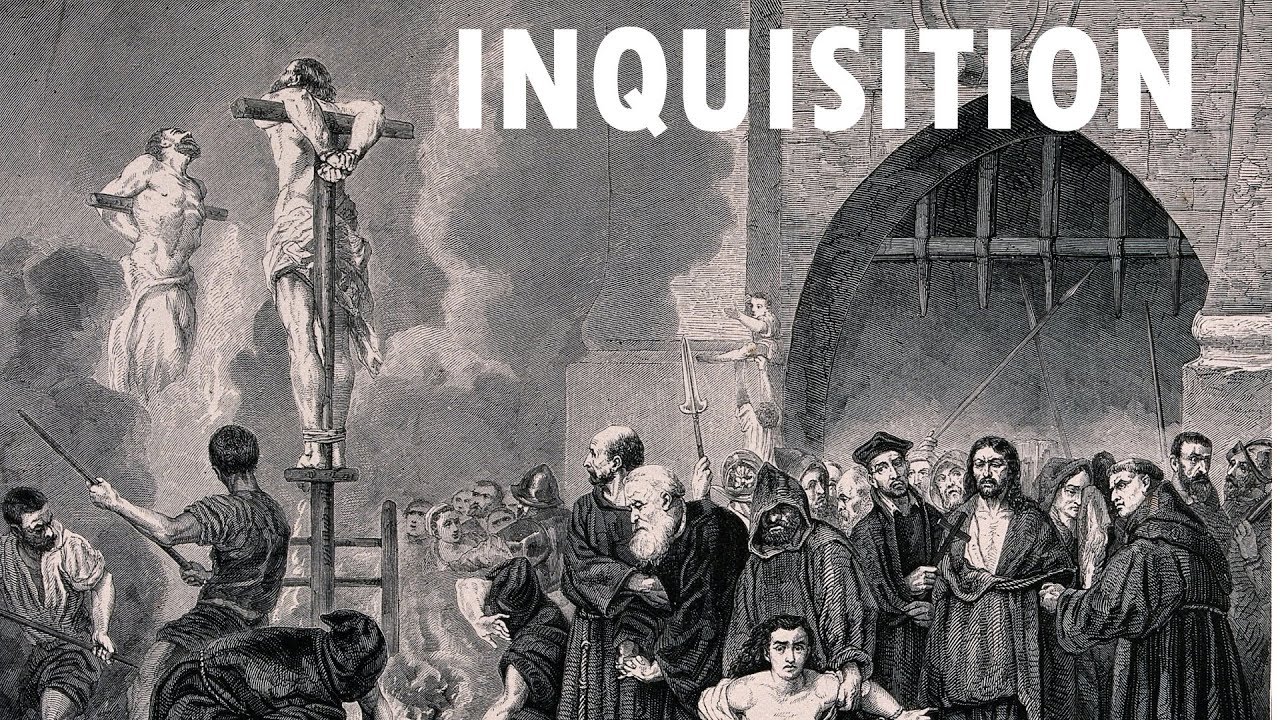
Sounds very similar to the Catholic Church’s Inquisiton, which took place between the 12th and fifteenth and whose aim was to combat heresy and other offenders against the legal or moral codes of the Church. Some will recall that Henry II, as well as other secular rulers, used the Inquisition extensively during the twelfth century when an official inquirer of the Inquisition (investigation) called for information on a specific subject from anyone who felt he or she had something to offer.

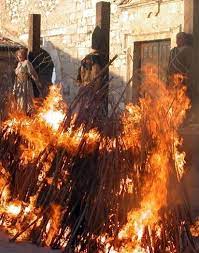
Heretics were burned at the stake in Spain and elsewhere

Why the name“The Pillar”, you might ask. Well, here’s their rather pius rationale for their investigative journalism: “God led the Israelites through the desert as a pillar of cloud and a pillar of fire. Samson took down pillars at a Philistine temple, and Christ was scourged at a pillar. Lot’s wife became a pillar of salt, and in the early Church, monks climbed to the top of great pillars to pray for the world below them. God’s justice, God’s mercy, and God’s goodness are all revealed through the imagery of pillars in Scripture. We hope The Pillar reveals those things too.”

You and I might say that they fail to include what Jesus says about the “sins” of others:

“Do not judge, or you too will be judged. For in the same way you judge others, you will be judged, and with the measure you use, it will be measured to you. “Why do you look at the speck of sawdust in your brother’s eye and pay no attention to the plank in your own eye? How can you say to your brother, ‘Let me take the speck out of your eye,’ when all the time there is a plank in your own eye? You hypocrite, first take the plank out of your own eye, and then you will see clearly to remove the speck from your brother’s eye.” Mt 7:1-5 

Plank? Pillar? Whatever it is that The Pillar is pointing out, their method is still what Jesus is denouncing. 

And in another reference to pointing out the sins of others: 

“The teachers of the law and the Pharisees brought in a woman caught in adultery. They made her stand before the group and said to Jesus, “Teacher, this woman was caught in the act of adultery. In the Law, Moses commanded us to stone such women. Now what do you say?” They were using this question as a trap, in order to have a basis for accusing him. But Jesus bent down and started to write on the ground with his finger. When they kept on questioning him, he straightened up and said to them, “Let any one of you who is without sin be the first to throw a stone at her.” Jn 8:5-7

Similar to the role of the Pharisees and Sadducees who were staunch defenders of the Law of Moses, the staff of this investigative endeavor touts their conservative allegiance to serious Catholic journalism “as a service to Christ and the Church” and that “journalism can be done in a uniquely Catholic way, which takes the doctrine of the Catholic Church to be true, which treats people with respect, and which looks for the truth above all else.”

Treating people with respect by exposing their less than criminal behavior is not really respect.

I guess they also forget what Jesus said about pointing out or excising the weeds from the wheat: “The owner’s servants came to him and said, ‘Sir, didn’t you sow good seed in your field?  Where then did the weeds come from?’ “An enemy did this,’ he replied. “The servants asked him, ‘Do you want us to go and pull them up?’ “‘No,’ he answered, ‘because while you are pulling the weeds, you may uproot the wheat with them. Let both grow together until the harvest. At that time I will tell the harvesters: First, collect the weeds and tie them in bundles to be burned; then gather the wheat and bring it into my barn.’” Mt 13:27-29

The Pillar’s rationale for investigating people and reporting their findings sounds rather matter of fact and dutiful, but I recall that the motto of many Catholic seminaries around the world just happens to be “Exit Qui Seminat” or ‘He who goes Forth sows Seed”.

Some might conclude that Jesus’ directive would mean that the wheat and weeds or the good and bad in every person is not to be exposed or “pulled out” and judged before the “harvest.” There is no criminal activity that has been reported in the latest Pillar report unless the Church’s Canon Law and Catechism are now considered the legal code of America! Rather, some would say it is an intrusion into someone’s privacy and it should be up to God to judge it.

Yet, The Pillar states: We think the story matters more than we do, and we’d rather tell you the facts than tell you what we think. We aim to focus on the facts, and to provide the context and background that helps make sense of them.” 

Vintage illustration of tribunal (interrogatory) of the inquisition. After the painting by Adolphe Steinheil. Man being tortured by the spanish inquisition, forced confession hanging by a rope around the wrists with wieghts attached to his feet

It sounds like such a noble vocation yet one that is reminiscent of the Cathoic Church Inquisitors of old. I believe it was Shakespeare who had Juliet say “A rose by any other name would smell as sweet” The reference is often used to imply that the names of things do not affect what they really are. 

The Pillar seems to be journalism that measures one’s loyalty to the Catholic Maigisterium rather than one’s adherence to the message of Jesus which is compassion, mercy, and forgiveness all wrapped in the non-judgmental cloak of respect and love for the sinner. I guess that is why the Catholic conservatives and traditionalists are not happy with Pope Francis. Some have actually called him a heretic!

VATICAN CITY (Reuters) – “A group of 19 Catholic priests and academics have urged bishops to denounce Pope Francis as a heretic, in the latest ultra-conservative broadside against the pontiff over a range of topics from communion for the divorced to religious diversity.” https://www.reuters.com/article/us-pope-heresy/conservatives-want-catholic-bishops-to-denounce-pope-as-heretic-idUSKCN1S73KE

We can only surmise that the famed, conservative, former Archbishop of Philadelphia, Charlie Chaput is aware of The Pillar and quite satisfied with their performance thus far. 

In closing this post, I am reminded of an essay from Betrand Russel about the Catholic Church and its history: 

“That is the idea — that we should all be wicked if we did not hold to the Christian religion. It seems to me that the people who have held to it have been for the most part extremely wicked. You find this curious fact, that the more intense has been the religion of any period and the more profound has been the dogmatic belief, the greater has been the cruelty and the worse has been the state of affairs. In the so-called ages of faith, when men really did believe the Christian religion in all its completeness, there was the Inquisition, with all its tortures; there were millions of unfortunate women burned as witches; and there was every kind of cruelty practiced upon all sorts of people in the name of religion.

You find as you look around the world that every single bit of progress in humane feeling, every improvement in the criminal law, every step toward the diminution of war, every step toward better treatment of the colored races, or every mitigation of slavery, every moral progress that there has been in the world, has been consistently opposed by the organized churches of the world. I say quite deliberately that the Christian religion, as organized in its churches, has been and still is the principal enemy of moral progress in the world.

You may think that I am going too far when I say that that is still so. I do not think that I am. Take one fact. You will bear with me if I mention it. It is not a pleasant fact, but the churches compel one to mention facts that are not pleasant. Supposing that in this world that we live in today an inexperienced girl is married to a syphilitic man; in that case the Catholic Church says, ‘This is an indissoluble sacrament. You must endure celibacy or stay together. And if you stay together, you must not use birth control to prevent the birth of syphilitic children.’ Nobody whose natural sympathies have not been warped by dogma, or whose moral nature was not absolutely dead to all sense of suffering, could maintain that it is right and proper that that state of things should continue.

That is only an example. There are a great many ways in which, at the present moment, the church, by its insistence upon what it chooses to call morality, inflicts upon all sorts of people undeserved and unnecessary suffering. And of course, as we know, it is in its major part an opponent still of progress and improvement in all the ways that diminish suffering in the world, because it has chosen to label as morality a certain narrow set of rules of conduct which have nothing to do with human happiness; and when you say that this or that ought to be done because it would make for human happiness, they think that has nothing to do with the matter at all. ‘What has human happiness to do with morals? The object of morals is not to make people happy.”― Bertrand Russell, Why I Am Not a Christian and Other Essays on Religion and Related Subjects

Jesus consoling the woman accused of adultery
Posted in Ecclesiology | Tagged , | Leave a comment

The TIME Has Come!

Jesus is the Way, the Truth, and the Life!

Litany of the Way of Jesus

Jesus came to Galilee, proclaiming the good news of God.
Saying, “The time is fulfilled.
And the kingdom of God has come near.”
Listen to his words. “Seek first the kingdom of God.”
The kingdom of God is all around you.
The kingdom of God is right there in your presence.

Reading the Word of God. Read a passage slowly and carefully within the bible.
Prayer. Having a loving conversation with God.
Meditation. Thinking deeply or dwelling upon a spiritual reality within a text.
Contemplation. Resting in Gods presence.
Action. Go and do likewise.


Pray: Your kingdom come on earth as it is in heaven,
Let us, by our vocation or calling, allow Your Kingdom
To be discovered
within us and around us!

The kingdom of God is a vision of a community committed to a distinctive way of life.
The first followers of Jesus became known as the “followers of the Way.”
As they listened to his teachings, they put them into practice.


Following Jesus means practicing radical love.
Love God with all your heart, mind, and strength.
Love your neighbor as yourself.
Treat others as you would have them treat you.
Love your enemies and do good to those who hate you.

Following Jesus means practicing lavish generosity.
Give to everyone who begs from you.
Do not refuse anyone who wants to borrow from you.
Lend, expecting nothing in return.
Sell your possessions, and give money to the poor.

Following Jesus means practicing extravagant forgiveness.
Forgive and you will be forgiven.
Pray for those who mistreat you.
Bless those who curse you.
Forgive seventy times seven times.
Following Jesus means practicing inclusive hospitality.

He welcomed the rejected and outcasts.
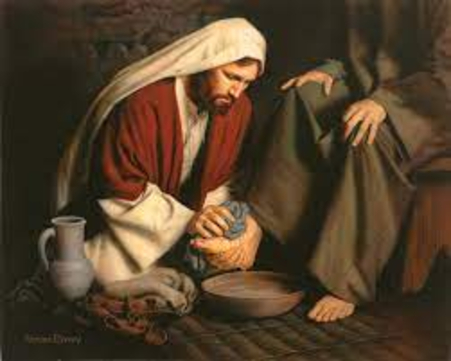
He touched and healed the unclean and diseased.
He shared meals with the despised and marginalized.
He blessed the destitute, the hungry, and the weeping.

Following Jesus means practicing compassionate action.
Jesus was moved with compassion to heal the sick.
Jesus was moved with compassion to feed the hungry crowds.
The Samaritan was moved by compassion for the man by the side of road.
The father was moved by compassion for his prodigal son.
Be compassionate as God is compassionate.
Blessed are the compassionate, for they shall receive compassion.

Following Jesus means practicing selfless service.
Feed the hungry.
Give drink to the thirsty.
Clothe the naked.
Care for the sick.
Visit the imprisoned.
Welcome the stranger and immigrant.
The greatest among you will be your servant.

Following Jesus means practicing a passion for justice.
Blessed are those who hunger and thirst for justice.
Blessed are those who are persecuted for the sake of justice.
Bring good news to the poor and oppressed.
Strive first for God’s justice.

Following Jesus means practicing creative nonviolence.
If anyone hits you on your right cheek, offer him your left cheek too.
If anyone forces you to go one mile, then go two miles.
If anyone takes your coat, give him the shirt off your back too.
If anyone takes away your goods, do not ask for them again.
Do not return evil for evil.
Blessed are those that work for peace.

Following Jesus means practicing simple living.
One’s life does not consist in the abundance of possessions.
Do not worry about what you will eat.
Do not worry about what you will drink.
Do not worry about what you will wear.
Jesus taught a way of costly commitment which led to the cross.
Empower us to respond to the call of Jesus.
To give up self-centered ambition.
To take up our crosses.
And to follow Jesus.

“I am the Way, the Truth, and the Life.”

Posted in Newest Posts | Leave a comment

Sowing Seeds of Scandal

A Crisis of Credibility in the Catholic Church

“Whoever causes one of these little ones who believe in me to sin, it would be better for him to have a great millstone fastened round his neck and to be drowned in the depth of the sea.” Mt 8:6

It’s so hypocritical for the Catholic Church leaders not to practice what they preach or teach. According to the Catechism of the Catholic Church:

2285 Scandal is grave when given by those who by nature or office are obliged to teach and educate others. Jesus reproaches the scribes and Pharisees on this account: he likens them to wolves in sheep’s clothing.

2286 Scandal can be provoked by laws or institutions, by fashion or opinion.

Therefore, they are guilty of scandal who establish laws or social structures leading to the decline of morals and the corruption of religious practice, or to “social conditions that, intentionally or not, make Christian conduct and obedience to the Commandments difficult and practically impossible.” This is also true of business leaders who make rules encouraging fraud, teachers who provoke their children to anger, or manipulators of public opinion who turn it away from moral values.

2287 Anyone who uses the power at his disposal in such a way that it leads others to do wrong becomes guilty of scandal and responsible for the evil that he has directly or indirectly encouraged. “Temptations to sin are sure to come, but woe to him by whom they come!”

When the Catholic Church lobbied to stop dozen of bills making their way through legislatures in states including New York and New Jersey that aim to give child sex assault victims more time to sue their attackers, many of the Faithful were scandalized.

When the Catholic Church endorsed Donald J. Trump, a known adulterer, white supremacist, and corrupt businessman for president in 2016, and in 2020, many Catholics believed that the Church committed a SCANDAL of great proportion. Many priests and bishops were on YouTube telling people during the homily at Sunday Mass that it was sinful to vote for Clinton and then Biden. 

Sister Dede Byrne, of the Little Workers of the Sacred Hearts of Jesus and Mary,

This raised an issue that most are not aware of: To keep their tax exempt status, the Catholic Church and all non profit entities  “may not support or oppose candidates for elected office.” This law is The Johnson Amendment and it provides that 501(c)(3) organizations – charitable nonprofits, houses of worship, and foundations – in exchange for the privilege of receiving donations that are tax-deductible to the donors, may not support or oppose candidates for elected office. Thus, to keep that special privilege, 501(c)(3) organizations may not endorse candidates or use any of their assets to support or oppose specific candidates. 

Yet, the Catholic Church violated that law and continues to do so. Just go to YouTube and search for “Catholic Churches that slam Biden” You can watch the many clergy that opposed his election and endorsed DJT. Technically, they should have to pay taxes. And even according to the church’s official Code of Canon Law, Canon 287 also states  it states that priests “are not to have an active part in political parties and in governing labor unions unless, in the judgment of competent ecclesiastical authority, the protection of the rights of the Church or the promotion of the common good requires it.” 

In a general audience at the Vatican on July 28, 1993 (later quoted in the “Directory on Ministry and the Life of Priests,” released by the Congregation for the Clergy in 1994), Pope John Paul II said that a priest “ought to refrain from actively engaging himself in politics, as often happens, in order to be a central point of spiritual fraternity.” The Congregation for the Clergy’s document also quotes from the Catechism of the Catholic Church, published in 1993: “It is not the role of the Pastors of the Church to intervene directly in the political structuring and organization of social life. This task is part of the vocation of the lay faithful [emphasis in original], acting on their own initiative with their fellow citizens.” The “Directory” states further that the “reduction of [a priest’s] mission to temporal tasks, of a purely social or political nature, is foreign to his ministry, and does not constitute a triumph but rather a grave loss to the Church’s evangelical fruitfulness.”

President Joe Biden is upholding the First Amendment which states that: “Congress shall make no law respecting an establishment of religion, or prohibiting the free exercise thereof”. Despite the fact that President Biden and other Catholics are not for abortion, he and they believe that the Catholic Church or any other Church or religion cannot impose their beliefs upon the American citizens in keeping with the First Amendment.

The Catholic Church is asking Catholic citizens to ignore the First Amendment while the Church itself breaks the tax code for non-profits! It is a fact that the Catholic Church has been involved in many scandals in its history.

The latest being the following reported in the Anchorage Daily News and the Associated Press found that “The U.S. Roman Catholic Church used a special and unprecedented exemption from federal rules to amass at least $1.4 billion in taxpayer-backed coronavirus aid, with many millions going to dioceses that have paid huge settlements or sought bankruptcy protection because of clergy sexual abuse cover-ups. By aggressively promoting the payroll program and marshaling resources to help affiliates navigate its shifting rules, Catholic dioceses, parishes, schools and other ministries have so far received approval for at least 3,500 forgivable loans, The Archdiocese of New York, for example, received 15 loans worth at least $28 million just for its top executive offices. Its iconic St. Patrick’s Cathedral on Fifth Avenue was approved for at least $1 million. By aggressively promoting the payroll program and marshaling resources to help affiliates navigate its shifting rules, Catholic dioceses, parishes, schools and other ministries have so far received approval for at least 3,500 forgivable loans.” The Archdiocese of New York, for example, received 15 loans worth at least $28 million just for its top executive offices. Its iconic St. Patrick’s Cathedral on Fifth Avenue was approved for at least $1 million.” Read more at  Scandal-plagued Catholic Church lobbied heavily to get $1.4 billion in taxpayer-backed pandemic aid

The U.S. Roman Catholic Church used a special and unprecedented exemption from federal rules to amass at least $1.4 billion in taxpayer-backed coronavirus aid.

Another scandal that occurred years ago is now continuing with this report from  NBC news.

“Nearly 1,700 priests and other clergy members that the Roman Catholic Church considers credibly accused of child sexual abuse are living under the radar with little to no oversight from religious authorities or law enforcement, decades after the first wave of the church abuse scandal roiled U.S. dioceses, an Associated Press investigation has found.”

American Bishops reassigned abuser priests.

“Dioceses and religious orders so far have shared the names of more than 5,100 clergy members, with more than three-quarters of the names released just in the last year. The AP researched the nearly 2,000 who remain alive to determine where they have lived and worked — the largest-scale review to date of what happened to priests named as possible sexual abusers.” Read more at: Almost 1,700 priests and clergy accused of sex abuse are unsupervised
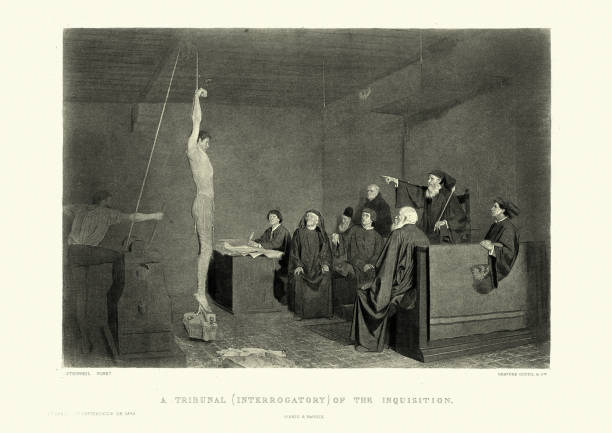
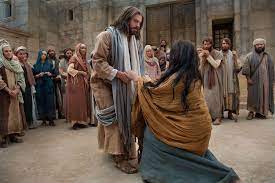
DO the American bishops think that they can just continue to focus on abortion, communion, and the Latin Mass as distractions from the perpetual violation of their own Canon Law and Catechism of the Catholic Church not to mention their violation of the Johnson Amendment to the IRS Tax Code?

Then there’s the indictment of several Church officials, a prominent French priest and psychotherapist who was once an influential Vatican adviser on matters regarding human sexuality. Heis going to face trial in a church court over accusations of inappropriate sexual relationships with male clients, the Paris Archdiocese has confirmed. Read more at:French priest, former Vatican adviser, to face church trial on abuse claims

Another scandal that many are unaware of: VATICAN CITY, July 3 (Reuters) – A prominent Italian cardinal was among 10 people sent to trial in the Vatican on Saturday charged with financial crimes including embezzlement, money laundering, fraud, extortion and abuse of office. Read more at: Cardinal among 10 indicted by Vatican for financial crimes
Pope Francis speaking about the Church scandals

Even Pope Francis is troubled by the many scandals that the Catholic Church has caused. In 2019,  the year ended for the Pope in embarrassment when he angrily slapped the hand of a woman who had pulled on his own while he was greeting pilgrims on New Year’s Eve. He began 2020 with a public apology for losing his patience and setting a “bad example.”

It was a fitting coda to a year in which the pope addressed one scandal—the Catholic Church’s sex-abuse crisis—only to become embroiled in another, over the Vatican’s murky finances. Read more here: https://www.wsj.com/articles/pope-francis-struggles-to-escape-scandals-of-2019-11578052800

While the Church has been tainted by its dark history, their is always the hope that the Body of Christ will undergo major surgery to remove the cancer of clericalism, patriarchy, authoritarianism and misogyny as penance for its many offenses against its own laws and those of Jesus!  Many Church scholars and historians point to the fourth century as the beginning of the Church sowing the seeds of scandal.

“Was the Constantinian alliance a betrayal of the pure essence of Christianity, with religion contributing to society and culture at the risk of its own soul, at the expense of its eternal mission? One might wonder if ‘real Christianity’ uncontaminated by the world could have survived. “Can Jesus be preached in the whole world without ecclesiasticism?” asked Friedrich Naumann, an exponent of charismatic religion in the early years of the twentieth century. “Can molten gold be carried from place to place in anything but crucibles of iron and steel?” from The Oxford Illustrated History of Christianity edited by John McManners

Nonetheless, there’s no shortage of material for accusing the Church of a dark history in which so many seeds of scandal were sown. The horror is that it continues to this day!

It’s fitting to end with the words from Matthew’s gospel and some final thoughts.

Then Jesus went with his disciples to a place called Gethsemane, and he said to them, “Sit here while I go over there and pray.” He took Peter and the two sons of Zebedee along with him, and he began to be sorrowful and troubled. Then he said to them, “My soul is overwhelmed with sorrow to the point of death. Stay here and keep watch with me” Going a little farther, he fell with his face to the ground and prayed, “My Father, if it is possible, may this cup be taken from me. Yet not as I will, but as you will.” Then he returned to his disciples and found them sleeping. “Couldn’t you men keep watch with me for one hour?” he asked Peter.“Watch and pray so that you will not fall into temptation. The spirit is willing, but the flesh is weak. ”He went away a second time and prayed, “My Father, if it is not possible for this cup to be taken away unless I drink it, may your will be done.”  When he came back, he again found them sleeping, because their eyes were heavy. So he left them and went away once more and prayed the third time, saying the same thing. Then he returned to the disciples and said to them, “Are you still sleeping and resting? Look, the hour has come, and the Son of Man is delivered into the hands of sinners. Mt 26: 36-45

The Catholic Church and its many traditionalists or conservatives can’t remain “asleep” as the world turns into the third decade of the twenty-first century. Their longing for the days of the Church Militant cannot erase the seventeen hundred years of dark history but instead it will extend it.  

Jesus’ exhortation was pretty clear:

“You are the salt of the earth. But if the salt loses its saltiness, how can it be made salty again? It is no longer good for anything, except to be thrown out and trampled underfoot.

“You are the light of the world. A town built on a hill cannot be hidden. Neither do people light a lamp and put it under a bowl. Instead they put it on its stand, and it gives light to everyone in the house. In the same way, let your light shine before others, that they may see your good deeds and glorify your Father in heaven.” Mt 5: 13-16

Creating laws and getting involved in politics is not what Jesus taught or expected. 

He said to them, “Go into all the world and preach the gospel to all creation.”
Mk 16:15
Posted in Ecclesiology, Morality | Leave a comment

The Unbelief of Believers

The Difference between Cheap Grace and Costly Grace

In the book, Atheism in Our Time, Ignace Lepp, a psychoanalyst and convert to Catholicism from Marxism, offers explanations for the unbelief of believers.

His writing is based on his experience as a therapist, a communist, and an atheist. In the Introduction to his book he confesses that when he became a Catholic at the age of 27, he admitted that as a student of theology, he was not impressed by the proofs offered by the Council of Trent and those of the Second Vatican Council which he said “prove nothing to one who does not have faith.” He concluded that “no defined proposition could serve as an argument against a man’s personal experience.” 

What did impress him were the social and cultural explanations for the function of religion. He found that most non-believers associate religion with indoctrination that can lead to persecutions and wars like what occurred from the Middle Ages and leading up to the twentieth century.

 The Enlightenment, they also would claim, offers proof that religion was a denial of the facts and truths discovered by the various sciences. Even Communism was seen as a more reasonable alternative to religion because it demanded equality for all people which resulted in the reality of the goals of Christianity without the creeds, dogmas, and belief in the supernatural. But the world quickly learned that autocracy and communism do not work. 

What the social and cultural explanations for religion did for Lepp was to verify that all humans have some belief in a power beyond themselves and that the existence of that power somehow gives significance and meaning to the universe, nature, and humanity. This was also the subject of a book by William James entitled, The Varieties of Religious Experience in which he defines faith as “the sense of life by virtue of which man does not destroy himself but lives on. It is a force by which he lives.”

With all this noted, one may ask, “What is the unbelief of those who believe? 

Let’s begin with the gospel of John who recalls that Jesus confronted the Jews about their unbelief. “Even after Jesus had performed so many signs in their presence, they still would not believe in him. This was to fulfill the word of Isaiah the prophet: “Lord, who has believed our message and to whom has the arm of the Lord been revealed?” For this reason, they could not believe, because, as Isaiah says elsewhere: “He has blinded their eyes and hardened their hearts so they can neither see with their eyes, nor understand with their hearts, nor turn—and I would heal them.”

For this reason, they could not believe!

The apostle Paul explained that the doctrine of salvation by grace through faith in Christ should cause us to be loving towards others. It accomplishes this first by making us humble. In Romans 3:9-12 this fact, coupled with the truth that righteousness is not merited through works but “is given through faith in Jesus Christ to all who believe” (Rom. 3:22),  lays the foundation for unity within the church.

The apostle says as much in Romans 3:27 when speaking against boasting, and he also stated in Ephesians 2:8-9, “For it is by grace you have been saved, through faith—and this is not from yourselves, it is the gift of God—not by works, so that no one can boast.” Because we are justified by God, “There is neither Jew nor Gentile, neither slave nor free, nor is there male and female, for you are all one in Christ Jesus” (Gal. 3:28).

The apostle James in his letter criticizes those who call themselves Christians because they think it sufficient to believe in God. He writes that “a person is considered righteous by what they do and not by faith alone” and that “faith without works is dead.” So, James tells us that if someone claims to have a commitment—faith—and assumes that on this basis they will be saved or delivered in the final judgment, but they don’t have the works of charity or other forms of obedience to God, then they are deceived.

It appears that Paul and James are preaching two messages. Since Paul is the most often quoted and the more influential of the two, many Christians adhere to his teaching without considering that of James.

Searching the Scriptures, we see that Paul also says: faith also involves assent to God’s truth (1 Thessalonians 2:13), obedience to Him (Romans 1:5, 16:26), and it must be working in love (Galatians 5:6). These are just as crucial as believing and trusting. (1 Corinthians 13:1-3) 

Paul speaks of faith as a life-long process, never as a one-time experience (Philippians 2:12). He never assumes he has nothing to worry about. If he did, his words in (1 Corinthians 9:24-27) would be nonsensical. He reiterates the same point again in his second letter to Corinth (2 Corinthians 13:5). He takes nothing for granted, yet all would agree if anyone was “born again” it certainly was Paul. Our Lord and Savior spoke of the same thing by “remaining in Him” (John 15:1-11).

Do our works mean anything? According to Jesus, they do (Matthew 25:31-46). The people rewarded and punished are done so by their actions. And our thoughts (Matthew 15:18-20) and words (James 3:6-12) are accountable as well. These verses are just as much part of the Bible as Romans 10:8-13 and John 3:3-5.

Faith is an inheritance (Galatians 5:21), freely given to anyone who becomes a child of God (1 John 3:1), so long as they remain that way (John 15:1-11). You can’t earn it but you can lose the free gift given from the Father (James 1:17).

James makes the case for combining what he and Paul say: “What good is it, my brothers and sisters if someone claims to have faith but has no deeds? Can such faith save them? Suppose a brother or a sister is without clothes and daily food.  If one of you says to them, “Go in peace; keep warm and well fed,” but does nothing about their physical needs, what good is it? In the same way, faith by itself, if it is not accompanied by action, is dead.” James 2: 14-17

Now we can try to describe what the unbelief of those who believe is. Lepp claims that the unbelief of believers, much more than that of genuine atheists, is the real cause of the desacralization of the modern world, of its descent into the most sordid of pragmatic materialism. Those who claim to have FAITH in Jesus yet do nothing to implement his message of love, forgiveness, compassion, and mercy become more of a scandal than an atheist. St. Francis of Assisi wrote “Let all the brothers, however, preach by their deeds” – Chapter XVII of the Franciscan Rule

What is the fullness of belief in God? Is it expressed in our attendance at Mass and recitation of the Nicene Creed every Sunday: “I believe in one God……”?  Is our presence there enough to show that we believe in God and want to follow Jesus? According to Paul and James- our faith should change the way we live and act. It should influence our decisions and lifestyle. It should contribute to the building up of the Kingdom of God.

Mother Theresa Oscar Romero

Are we expected to live like Mother Theresa or Oscar Romero, Aren’t they saints? By the fourth century, martyrs and people who had confessed their faith not by dying but by word and life—began to be venerated publicly after they died. Their names written in headstones and their likenesses carved into statues and pictured in stained glass windows were and are reminders that we should imitate or exemplify them in some manner. They lived the teachings of Jesus- they let HIS light shine through them.

Yet, most Catholics seem to pray to saints for favors or simply remember them on their feast days. The legacies of St. Patrick, St, Nicholas, St. Valentine are occasions for great celebrations and parties but not necessarily seen as role models of discipleship. One example of this oversight is the life of St.Nicholas, the bishop of Myra, and his legendary habit of secret gift-giving to the poor which later gave rise to the traditional character of Santa Claus (“Saint Nick”). Most of us think of Santa as the bearer of gifts for children and for us as a reward for being nice instead of naughty instead of an opportunity to sacrifice and give to those in need.

We can also ask ourselves what is the difference between those of us who go to church and those who do not. We all must know non-believers who do good works by serving, volunteering, indeed even working in occupations that protect and defend us or clean up after us. Isn’t that service even though they are paid for their service. 

Isn’t the Sermon of the Mount, the Beatitudes as we call it, one of the many teachings of Jesus that we are supposed to incorporate into our lives in addition to intellectual and theological belief? 

Parables about Good Works and Virtues

Parables about responsibility and Grace

“Not everyone who says to me, ‘Lord, Lord,’ will enter the kingdom of heaven, but only the one who does the will of my Father who is in heaven.” Mt 7:21

The Parable of the Bags of Gold teaches us that we are to use the gifts and talents that God has given us, for the good of others.The master chastises the man who didn’t do anything with the gold he was given.  “Then the man who had received one bag of gold came. ‘Master,’ he said, ‘I knew that you are a hard man, harvesting where you have not sown and gathering where you have not scattered seed. So I was afraid and went out and hid your gold in the ground. See, here is what belongs to you.’

“His master replied, ‘You wicked, lazy servant! So you knew that I harvest where I have not sown and gather where I have not scattered seed? Well then, you should have put my money on deposit with the bankers, so that when I returned I would have received it back with interest.“‘So take the bag of gold from him and give it to the one who has ten bags. For whoever has will be given more, and they will have an abundance. Whoever does not have, even what they have will be taken from them. And throw that worthless servant outside, into the darkness, where there will be weeping and gnashing of teeth.’”              Mt 25:24-30

Holding onto Catholic rituals, devotions, and spiritual 

insights is of no use unless they produce good fruit. Our spiritual life is not just about saving our souls but about saving the lives and souls of others. We can’t serve mammon and God. It’s one or the other. As a disciple of Jesus, we should work to bring about the Kingdom of God in all we do. Every Christian must let the Light of Christ shine through all their actions no matter what their occupation of status.

Then the question is: Does Capitalism fit the paradigm of Jesus’ command to follow him, to do as he did, and pay attention to the plight of others? Isn’t socialism more in keeping with building up the Kingdom of God instead of building up our own kingdom of riches and securities? The gospel of prosperity is not the gospel of Jesus!

Prosperity theology (sometimes referred to as the prosperity gospel, the health and wealth gospel, the gospel of success, or seed faith) is a religious belief among some Christians that financial blessings and physical well-being are always a reward for doing the will of God and that faith, positive speech, and donations to religious causes will increase one’s material wealth.

The gospel of prosperity is not the gospel of Jesus!

Prosperity theology views the Bible as a contract between God and humans: if humans have faith in God, he will deliver security and prosperity. The doctrine emphasizes the importance of personal empowerment, proposing that it is God’s will for his people to be blessed or well off. The atonement (reconciliation with God) is interpreted to include the alleviation of sickness and poverty, which are viewed as curses to be broken by faith. 

The “Eye of the Needle” has been claimed to be a gate in Jerusalem, which opened after the main gate was closed
at night.

Some 1st-century rabbis portrayed material blessings as a sign of God’s favor. Jesus’ statement in Mark 10:25 that “It is easier for a camel to go through the eye of a needle than for a rich man to enter into the kingdom of God” is evidence to oppose the prosperity gospel of today’s world.

Paul’s words are very true, “For it is by grace you have been saved, through faith—and this is not from yourselves, it is the gift of God—not by works, so that no one can boast.” Because we are justified by God” but GRACE can be of two types. 

Finally, the difference between the Unbelief of Believers and the Belief of true discipleship is best explained by Dietrich Bonhoeffer’s,  Cheap grace that required very little of disciples and Costly grace that required leaving everything, to follow Jesus. 

Cheap grace means grace sold on the market like cheapjacks’ wares. The sacraments, the forgiveness of sin, and the consolations of religion are thrown away at cut prices. Grace is represented as the Church’s inexhaustible treasury, from which she showers blessings with generous hands, without asking questions or fixing limits. Grace without price; grace without cost! The essence of grace, we suppose, is that the account has been paid in advance; and, because it has been paid, everything can be had for nothing. Since the cost was infinite, the possibilities of using and spending it are infinite. What would grace be if it were not cheap?…

Cheap grace is the preaching of forgiveness without requiring repentance, baptism without church discipline, Communion without confession, absolution without personal confession. Cheap grace is grace without discipleship, grace without the cross, grace without Jesus Christ, living and incarnate.

Costly grace is the treasure hidden in the field; for the sake of it a man will go and sell all that he has. It is the pearl of great price to buy which the merchant will sell all his goods. It is the kingly rule of Christ, for whose sake a man will pluck out the eye which causes him to stumble; it is the call of Jesus Christ at which the disciple leaves his nets and follows him.

Costly grace is the gospel which must be sought again and again, the gift which must be asked for, the door at which a man must knock.

Such grace is costly because it calls us to follow, and it is grace because it calls us to follow Jesus Christ. It is costly because it costs a man his life, and it is grace because it gives a man the only true life. It is costly because it condemns sin, and grace because it justifies the sinner. Above all, it is costly because it cost God the life of his Son: “ye were bought at a price,” and what has cost God much cannot be cheap for us. Above all, it is grace because God did not reckon his Son too dear a price to pay for our life, but delivered him up for us. Costly grace is the Incarnation of God.”

― Dietrich Bonhoeffer, The Cost of Discipleship

Dietrich Bonhoeffer,  a German Lutheran pastor, theologian, anti-Nazi dissident, was accused of being associated with the 20 July plot to assassinate Adolf Hitler. He was quickly tried along with other accused plotters, including former members of the Abwehr (the German Military Intelligence Office), and then hanged on 9 April 1945 as the Nazi regime was collapsing. He believed that his discipleship required him to try his best to eliminate the source of the evil that was responsible for the murder of almost 6 million Jews and those who supported them. 

“Costly grace is the call of Jesus Christ at which the disciple leaves his nets and follows him.” This is the Belief that is more than creed and worship but is alive in the actions and life of the disciple.

Posted in Catholic Teachings, Discipleship, Spirituality | Leave a comment

Is the Church a “society of un-equals” ?

clergy (teachers, rulers, and sanctifiers)  laity (led, taught, and sanctified).

Clergy and Laity

In 1 Peter 5, the author explicitly warns the early Church leaders: “I exhort the presbyters among you, as a fellow presbyter and witness to the sufferings of Christ and one who has a share in the glory to be revealed. ”Tend the flock of God in your midst, [overseeing] not by constraint but willingly, as God would have it, not for shameful profit but eagerly. Do not lord it over those assigned to you, but be examples to the flock. And when the chief Shepherd is revealed, you will receive the unfading crown of glory. Likewise, you younger members, be subject to the presbyters. And all of you, clothe yourselves with humility in your dealings with one another, for:

“God opposes the proud.” but bestows favor on the humble.”

Once Christianity became the religion of Rome in the 4rh century, the presbyter (elder or pastor)  and episkopos (overseer or bishop) became the “lording agents”  of the Roman Empire. Remember, the Roman emperor, Constantine, played an influential role in the proclamation of the Edict of Milan in 313, which declared tolerance for Christianity in the Roman Empire. He convoked the First Council of Nicaea in 325, which produced the statement of Christian belief known as the Nicene Creed. The papal claim to temporal power in the High Middle Ages was based on the fabricated Donation of Constantine. transferred authority over Rome and the western part of the Roman Empire to the Pope. Power, Fame, and Fortune become the attributes of clericalism which was fabricated on the structure of Rome’s senate and governing style not on the early Church’s leadership of communities led by the apostles, including Paul, Barnabus, Appolos and Ignatius of Antioch.

We know that bishops, including the bishop of Rome, were elected by the people in the early days of the church. Later in Rome, the Roman Senate was sometimes involved in selecting popes prior to the creation of the College of Cardinals”, writes Tom Reese, “Not surprisingly, the cardinals for many centuries saw themselves as successors to the Roman Senate, and until the revision of the Code of Canon Law in 1983, the College of Cardinals was referred to in church law as a senate. Diocese” was a territorial division in the Roman Empire. “Curia” was the Roman Senate or where it met. “Dicastery” was a court or judgment hall.” NCR, Political Models for the Papacy 2014

Marcus Borg, the scripture scholar wrote:

“In the first third of the 300s, as the Roman emperor Constantine legalized Christianity and then became its patron, Pope Sylvester, the bishop of Rome from 314-335, had a dream. He understood it to mean, ‘Now is poison poured into the church.’ I owe my awareness of Sylvester’s dream to a lecture by Douglas John Hall, one of the most important theologians of our time. Delivered at Emmanuel College in the University of Toronto in October of this year, its title was “The Future of the Church.” The story, Hall notes, is a later Christian legend. Sylvester may never have had such a dream. But it reflects a realization on the part of whoever created the legend and those who repeated it that something poisonous began to happen to Christianity when it became allied with a dominant culture.

The image of a poisoned church, a poisoned Christianity, is striking. It refers to what might be called “the cultural captivity of the church” – namely, Christianity co-opted by and conformed to the conventions of culture, which most often have been about dominance, power, and wealth.”

The cultural captivity of Christianity – the poison of Sylvester’s dream -continues to shape American Christians (and Christians in many other countries). We cannot avoid being shaped by the culture in which we grow up and live. But we can be more or less conscious of the way we have been shaped by our time and place, and more or less conscious of how Christianity’s vision of the way things should be may be quite different”    https://www.patheos.com/blogs/marcusborg/

The Culture of Clericalism

In his groundbreaking book, Clericalism: The Death of Priesthood, Geroge Wilson, S.J. writes, “Our love for this warty old Church demands of us that we recognize  clericalism where it exists, and work against it in favor of the priesthood to which we are called by virtue of our baptism.”

Cultures are a mix of factors: beliefs, art, music, ethnicity, religious and social ceremonies, as well secular everyday practices, language, and rituals. Uniforms, titles, symbols, practices, and customs shape us at home and at church and within religious and secular activities.

Participating in any group gives one a status that can impress others depending on the importance and significance of the group. Police, fire personnel, sports teams, entertainment celebrities, and even priests, rabbis, doctors, professors, and many more positions of notoriety can cause extreme admiration and even deference to them. Religious leaders are at the top of the status ladder because they represent God, Jesus and other spiritual powers. That power becomes a key to opening the doors of special prerogatives, privileges, and honor.

For the Catholic clergy, dress, address, as in titles like “Father, Reverend, Monsignor, Excellency, and Eminence, imply an importance or status that dare not be ignored or insulted by lack of protocol. Members of the clergy, therefore, have an allegiance to one another to uphold that status no matter what and the people they influence or lead usually expect grand entitlement for them. They are proud of their leaders who display such grandeur and ostentatious trappings. Simplicity in such a culture as ours can indicate inferiority or lack of esteem.

As long as those outside the culture of clericalism reinforce that status by affirming it with extreme admiration and attention, the members of the clergy will be reluctant to give up that status.

One’s Personna or Mask aka costume and demeanor as well as their title or position in the group brings with it a certain trust and power that is hard to resist. For the priest, the collar, cassock, and the title, allow him to automatically receive a place of honor and privilege among the faithful. Some say that this trust and power were contributing factors to the sexual abuse of children by some members of the clergy. 

Contrast this with the example of Jesus

Referring to the Pharisees, Jesus said, “Everything they do is done for people to see: They make their phylacteries wide and the tassels on their garments long; they love the place of honor at banquets and the most important seats in the synagogues;  they love to be greeted with respect in the marketplaces and to be called ‘Rabbi’ by others.“But you are not to be called ‘Rabbi,’ for you have one Teacher, and you are all brothers.” Mt 23:5-8

Referring to himself:  “You call me ‘Teacher’ and ‘Lord,’ and rightly so, for that is what I am.  Now that I, your Lord and Teacher, have washed your feet, you also should wash one another’s feet.” John 13:13-14 

The clergy need to reflect on how Jesus wanted his disciples to appear, not as officials or intimidating authorities but as servants.

Sending his disciples out to do their ministry, “He told them: “Take nothing for the journey—no staff, no bag, no bread, no money, no extra shirt. Whatever house you enter, stay there until you leave that town.”  Lk 9:3-4 

At another time, “Then Jesus asked his disciples, “When I sent you out that time without purse, bag, or shoes, did you lack anything?” “Not a thing,” they answered.” 

Both of these passages imply minimal necessities needed for their ministry. The simplicity of their apparel, demeanor, and actions would enhance their evangelizing efforts and attract others to follow Jesus. Yet for most of the time from the Roman Empire onward, the clergy have exhibited power, notoriety, and wealth as well as privilege.

Meanwhile, as the Catholic Church merged with the state and entered into the era of the Holy Roman Empire of Christendom, papal temporal power became prevalent under Charlemagne. And even later in the “High Middle Ages”  it expanded under the Gregorian Reform.

The Gregorian Reforms were a series of reforms initiated by Pope Gregory VII and the circle he formed in the papal curia, c. 1050–80, which dealt with the moral integrity and independence of the clergy from the responsibilities and concerns of their families since most were married.

One such reform was the imposition of clerical celibacy on the bishops and presbyters. This caused much consternation as the plight of the wives and children became a huge scandal.  Benedictine monastic practices were used to justify such separation of family members for the good of the Church and Christendom. This caused a major division between the clergy and the laity. The lust and greed of the papal power spread among the clergy as somewhat of a reward for the trials and tribulations of the newly celibate clergy.

Then because the Reformation impacted the Church in such a negative way, the Magisterium felt it necessary to convene, the Council of Trent, and the Counter-Reformation began to tighten the rules and regulations for the clergy and the laity to avoid heresy and the influence from a society that was no longer purely Roman Catholic. 

Those aspiring to the priesthood were resigned to a monastic-like spirituality and regulations that began with the candidates attending a diocesan seminary where such isolation would enable an indoctrination and training into the ways and manners of the clerical state. This was the way to encourage a celibate lifestyle that was missing from  Protestant ministers. This would solidify the separation between the clergy and the laity which was rejected by the Protestant Reformation.

St. Charles Borromeo Seminary for the Archdiocese of Philadelphia, Pennsylvania

Hence the Roman Catholic Church has remained the bulwark of authoritarian conservatism, clericalism, and patriarchy with a hierarchical structure that “lords it over” the laity despite the efforts of two major Vatican Councils. Reforms resulting from both these councils began to slowly change the stance of the Church in most matters pertaining to the training of seminarians, religious, and laity. Parochial education on all levels continued the indoctrination of Catholics to defend the Faith from Protestantism but failed to provide adults with the necessary religious skills to live as a disciple in the 20th century. Each council contributed to the development of two major components of the Magisterium: the first to the development of Canon Law and the second to the composition of the Catechism of the Catholic Church. Other Vatican II impacts were realized in the Liturgy, Ministries, and parish life and structure. Women were allowed to be appointed or chosen as catechists, lectors, cantors, and Eucharistic ministers. Male or female business managers were then hired for most parishes at the recommendation of newly formed Parish Councils who convened regularly to offer advice and assistance to the pastor in his administration and care of the parish church and its numerous facilities.

Yet resistance to Vatican II began almost immediately after the council concluded. Some of the Faithful, as well as the clergy, resented the changes that brought an end to some of the regal accoutrements of the clergy,and hierarchy as well as  the celebration of the Liturgy. The cassock and suit was replaced by the black shirt and colar, the lace albs and expensive vestments and robes were modified. The “altar of sacrifice” had become the “Table of the Lord”, the “Chalice” was then referred to as the “Cup of Salvation”, the “Throne” of the celebrant was now the “Presider’s Chair” and modern architecture for new church buildings replaced Gothic structures of old. These changes upset Catholic traditionalists who preferred the old Church.

Under Pope Benedict XVI some of the liturgical language was changed back to its pre-Council form and the reigns were tightened on the clerical training in seminaries which had become more like the Catholic Universities than monastic enclaves to instill a separation from the secular world.

Today, the Catholic Church is facing a crisis. In many countries, Mass attendance is down and a growing number of young Catholics are leaving the church. In addition to these challenges, fewer and fewer men are willing to enter the priesthood and women to the religious life.This trend, which began long before the clergy sex abuse scandal, is raising questions as to whether or not the church needs to reconsider its insistence on a male, celibate priesthood.

And, of course, there are many other concerns that the church might want to address – for example, whether the 98 percent of practicing Catholics who use “artificial means” of contraception – meaning anything other than the rhythm method – are sinners.

With the election of Pope Francis, a Jesuit, Vatican II teachings and pastoral attitudes were restored much to the dismay of many of the conservative laity and even Philanthropists including some clergy, bishops and cardinals. Pope Francis, for example, is well-known for decisions that emphasize simplicity and modesty. For example, he moved to a more simple apartment and is driven  in an ordinary Fiat automobile.  His compassion and empathy for those who don’t conform to Catholic teachings has been seen as acceptance of the non-conformists and caused some opposition.

Finally, the abuse scandal, the political involvement of the American Catholic Church in the last two elections, the strong opposition to women priests, and now the determination to prevent Pro-Choice politicians from receiving Communion could become the straw that breaks the camel’s back.

The need for more change and more lay participation in the leadership of the Catholic Church, and women priests is more obvious than ever but this could unleash a schism of great proportions. There seems to be a great divide in Catholcism reminiscent of the Protestant Reformation which took place in the 1500s. Since then Several Protestant Churches have even split from the main body of their denomination as well. This too could be the future of the Catholic Church. 

As the world turns the Churches too must turn to be more relevant to the people of new generations. Otherwise evangelization becomes ineffective to an ever changing society. 

Jesus was confronting the traditionalists of his day. He was introducing a new way of practicing the Jewish religion.

“No one sews a patch of unshrunk cloth on an old garment, for the patch will pull away from the garment, making the tear worse.Neither do people pour new wine into old wineskins. If they do, the skins will burst; the wine will run out and the wineskins will be ruined. No, they pour new wine into new wineskins, and both are preserved.” Mt 9:16-17

“Perhaps Jesus has part of the solution for the Catholic Church with his approach to solving controversy and division: “Not everyone who says to me, ‘Lord, Lord,’ will enter the kingdom of heaven, but only the one who does the will of my Father who is in heaven.” Mt 7:21 and  

“Beware of false prophets. They come to you in sheep’s clothing, but inwardly they are ravenous wolves. By their fruit you will recognize them. Are grapes gathered from thornbushes, or figs from thistles? Likewise, every good tree bears good fruit, but a bad tree bears bad fruit.… Mt 7:16-17

The Church, the Body of Christ, the People of God, need another Pentecost. The old must die and that can be hard and even horrific as was the crucifixion. But the resurrection can only happen after the old dies. The uncertainty of our times causes much confusion and even doubt. Yet Jesus has the answer.

“Amen, amen, I say to you, whoever believes in me will do the works that I do, and will do greater ones than these, because I am going to the Father” (John 14:12). “I will ask the Father, and he will give you another advocate to be with you always, the Spirit of truth, which the world cannot accept, because it neither sees nor knows it. But you know it, because it remains with you, and will be in you. I will not leave you orphans; I will come to you. In a little while the world will no longer see me, but you will see me, because I live and you will live. On that day you will realize that I am in my Father and you are in me and I in you.” 

Keep the Faith BUT share it as well!

Posted in Ecclesiology | 1 Comment