Why do the American Bishops Ignore their Own Teaching?

They should PRACTICE

what They PREACH

For Instance, here are some quotes from the document and how the Church in America violates its own statements.

Forming Consciences for Faithful Citizenship – Part I – The U.S. Bishops’ Reflection on Catholic Teaching and Political Life

7.  In this statement, we bishops do not intend to tell Catholics for whom or against whom to vote. Our purpose is to help Catholics form their consciences in accordance with God’s truth. We recognize that the responsibility to make choices in political life rests with each individual in light of a properly formed conscience, and that participation goes well beyond casting a vote in a particular election.

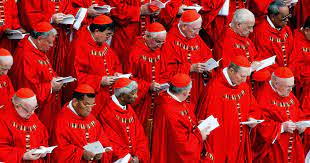
How many priests, pastors, bishops, cardinals, have endorsed or opposed specific candidates?

Examples

Fr. James Altman, a Wisconsin priest who became a right-wing firebrand for claiming during the 2020 election that faithful Catholics cannot be Democrats, for consistently ignoring COVID-19 safety protocols and for making a series of anti-immigrant and racist remarks, has been asked to step down as pastor of his church. National Catholic Reporter

President Biden’s Catholicism scrutinized by various priests and bishops

12. The Catholic community brings important assets to the political dialogue about our nation’s future. We bring a consistent moral framework-drawn from basic human reason that is illuminated by Scripture and the teaching of the Church-for assessing issues, political platforms, and campaigns. 

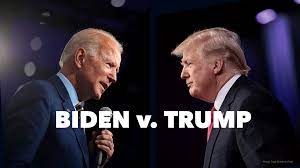
NOW compare the lifestyle, character, and history of Biden and Trump using the following Church teaching:

According to the Catechism of the Catholic Church:

2284 Scandal is an attitude or behavior which leads another to do evil. The person who gives scandal becomes his neighbor’s tempter. He damages virtue and integrity; he may even draw his brother into spiritual death. Scandal is a grave offense if by deed or omission another is deliberately led into a grave offense.

2285 Scandal takes on a particular gravity by reason of the authority of those who cause it or the weakness of those who are scandalized. It prompted our Lord to utter this curse: “Whoever causes one of these little ones who believe in me to sin, it would be better for him to have a great millstone fastened round his neck and to be drowned in the depth of the sea.”86 Scandal is grave when given by those who by nature or office are obliged to teach and educate others. Jesus reproaches the scribes and Pharisees on this account: he likens them to wolves in sheep’s clothing.87

2286 Scandal can be provoked by laws or institutions, by fashion or opinion.

Therefore, they are guilty of scandal who establish laws or social structures leading to the decline of morals and the corruption of religious practice, or to “social conditions that, intentionally or not, make Christian conduct and obedience to the Commandments difficult and practically impossible.”88 This is also true of business leaders who make rules encouraging fraud, teachers who provoke their children to anger,89 or manipulators of public opinion who turn it away from moral values.

Has the Catholic Church in America committed SCANDAL???

2287 Anyone who uses the power at his disposal in such a way that it leads others to do wrong becomes guilty of scandal and responsible for the evil that he has directly or indirectly encouraged. “Temptations to sin are sure to come; but woe to him by whom they come!”90

12. We also bring broad experience in serving those in need-educating the young, serving families in crisis, caring for the sick, sheltering the homeless, helping women who face difficult pregnancies, feeding the hungry, welcoming immigrants and refugees, reaching out in global solidarity, and pursuing peace. We celebrate, with all our neighbors, the historically robust commitment to religious freedom in this country that has allowed the Church the freedom to serve the common good

DOES the Church REALLY respect the fact that America is a country that does NOT ENDORSE any religion according to the very beginning of the Constitution in the First Amendment: Congress shall make no law respecting an establishment of religion. Atheists, Agnostics, indeed other religions have different moral guidelines and beliefs about ABORTION!

14. Unfortunately, politics in our country often can be a contest of powerful interests, partisan attacks, sound bites, and media hype. The Church calls for a different kind of political engagement: one shaped by the moral convictions of well-formed consciences and focused on the dignity of every human being, the pursuit of the common good, and the protection of the weak and the vulnerable

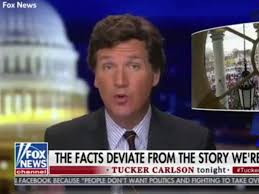
Does the Church condemn the LIES of FOX NEWS and NEWS MAX among the other lying media that spread conspiracy theories????

14. The Catholic call to faithful citizenship affirms the importance of political participation and insists that public service is a worthy vocation. 

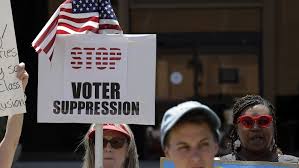
Is the Church condemning voter suppression laws in 47 states, Gerrymandering, and other steps to make it more difficult to vote??

These are just a few examples of how the Catholic Church leadership in America has either ignored certain parts of its own teaching or contradicted it.

Posted in Catholic Teachings, Morality | Leave a comment

New Book With A Catholic Perspective On The Pandemic Looks At The Church’s Future

Clemente Lisi

(REVIEW) One sure sign that the pandemic is fading may be the steady stream of books about it that have started to trickle out. It’s true that COVID-19 affected the planet like nothing else in our lifetimes. In fact, the fallout from what has transpired over the last 15 months could be felt for years, if not decades, to come.

How it affected the church, specifically Roman Catholicism, is of great importance to parishioners as well as societies around the world. That’s what a new book by journalist Philip Lawler, editor of Catholic World News, aims to explore. The book is detailed and exhaustive when it comes to the events of the last year. It also answers many of the questions Catholics, specifically those in the United States, may have now that virus is subsiding.

Were the lockdowns too draconian? Could government done things differently? How did both these affect the church and Catholicism going forward? Lawler’s book, “Why the Church Must Spread Hope, Not Fear, in a Pandemic” (published by Crisis Publications), is one of the first to closely examine how the pandemic affected the church.

Lawler’s book, whether you agree with his theory or not, is thought-provoking and not afraid to attack secular orthodoxies and narratives regarding public health and how its often adversarial relationship with religion led to the current situation the church finds itself in.

The 176-page book, a combination of reporting and research, argued that the lockdown message was “pounded by the media into our consciousness, encouraging us to live in isolation and to fear closeness with others, have produced the sort of dystopian environment that Thomas Hobbes sketched as the basis for his Leviathan: a society that sees human existence as a war of all against all, sees lives as ‘nasty, poor, brutish and short.’”

Lawler adds that he “was wrong to add arguments about Covid to the traditional list of dangerous topics for dinner-table conversation. It might be more accurate to say that the debates about Covid and the lockdown really were disputes about politics and religion, because they reflected some fundamental differences about the purposes of public policy and the meaning of human life. Humans are social animals. We are made to live in society, to interact with our family members, our friends, our neighbors. To avoid interaction is to work against our very nature. To see other people — all other people — as threats is perverse, an insult to the emotional and spiritual hard-wiring of the human person.”

Epidemics are nothing new to humans. Plagues date back to Biblical times, and in the ensuing centuries, have long involved the church. In those cases, the church was seen as a refuge for those who suffered. During this pandemic, it was not considered essential. Lawler’s book argues that cardinals and bishops were quick to comply with church closures, forcing Mass to be transformed into a Zoom call.

Lawler writes that churches in the United States, for example, “rely so heavily” on government funding to keep their charitable agencies afloat. He even notes that the sex-abuse scandal, resulting in negative press coverage over the years, had been “so badly scarred by the fallout” that it left the church in a weakened position.

Starting in March 2020, all public Masses were suspended in Vatican City and Italy due to the coronavirus. These suspensions began in late-February in the Archdioceses of Milan and Venice and soon spread across Italy and eventually the world. At the height of the outbreak, Pope Francis gave his Urbi et Orbi blessing, normally reserved for Christmas and Easter, from an empty Saint Peter’s Square. It was a sad sight and one that encapsulated how much the world had come to a standstill.

In hindsight, Lawler argues the pandemic, which has so far killed 3.5 million people in over 200 countries, could have been better managed. He argues that secular officials’ response to the virus was “at odds with Christian thought and doctrine.” He does acknowledge that the coronavirus was, and is, a serious health issue.   

“The loss of community is a loss of solidarity, a loss of charity, a loss of apostolic opportunity for evangelization. Worse, the lockdown and the closing of churches meant that lay Catholics were deprived of the sacraments, the wellsprings of sanctifying grace,” Lawler writes. “The church, obedient to divine command, sees communal worship not merely as a useful and salutary thing but as a moral obligation. … The costs of the lockdown have been greater than the toll of the virus; the cure has been worse than the disease.”

Is Lawler a COVID-denier? Not at all. Instead, he takes on the uniquely Catholic perspective that life is “not our ultimate destiny nor our ultimate goal. We are all mortal; we shall all die. While we uphold the right to life for every human being, we do not and cannot pretend that anyone has the ‘right’ to be preserved forever from death by natural causes. We can and do fight against disease. But when the crusade against one disease becomes the medical equivalent of a scorched-earth military campaign, with costs greater than the toll of the disease itself, responsible adults should recognize that the disproportionate response is immoral.”

This is where readers may disagree with Lawler — and that’s all right. This book is a great starting point for a debate and not just among Catholics. While the book is directed at Catholics, Christians, Jews and other faith traditions would benefit from reading it. After all, not just in-person Masses were canceled in the United States (while big box stores stayed open), but all religious services.  

As we approach a post-pandemic world, the church has to grapple with falling attendance in places like Ireland. It was a problem that had begun pre-pandemic. It’s true that online church may continue and even grow. The virus may have actually accelerated the decline in in-person attendance and potentially forever disrupting communities filled with mostly-empty houses of worship, just one more fallout of the events of the last 15 months.

Clemente Lisi is a senior editor and regular contributor to Religion Unplugged. He is the former deputy head of news at the New York Daily News and teaches journalism at The King’s College in New York City. Follow him on Twitter @ClementeLisi.

Posted in Ecclesiology | Leave a comment

Why we support the bishops’ plan to deny Communion to Biden

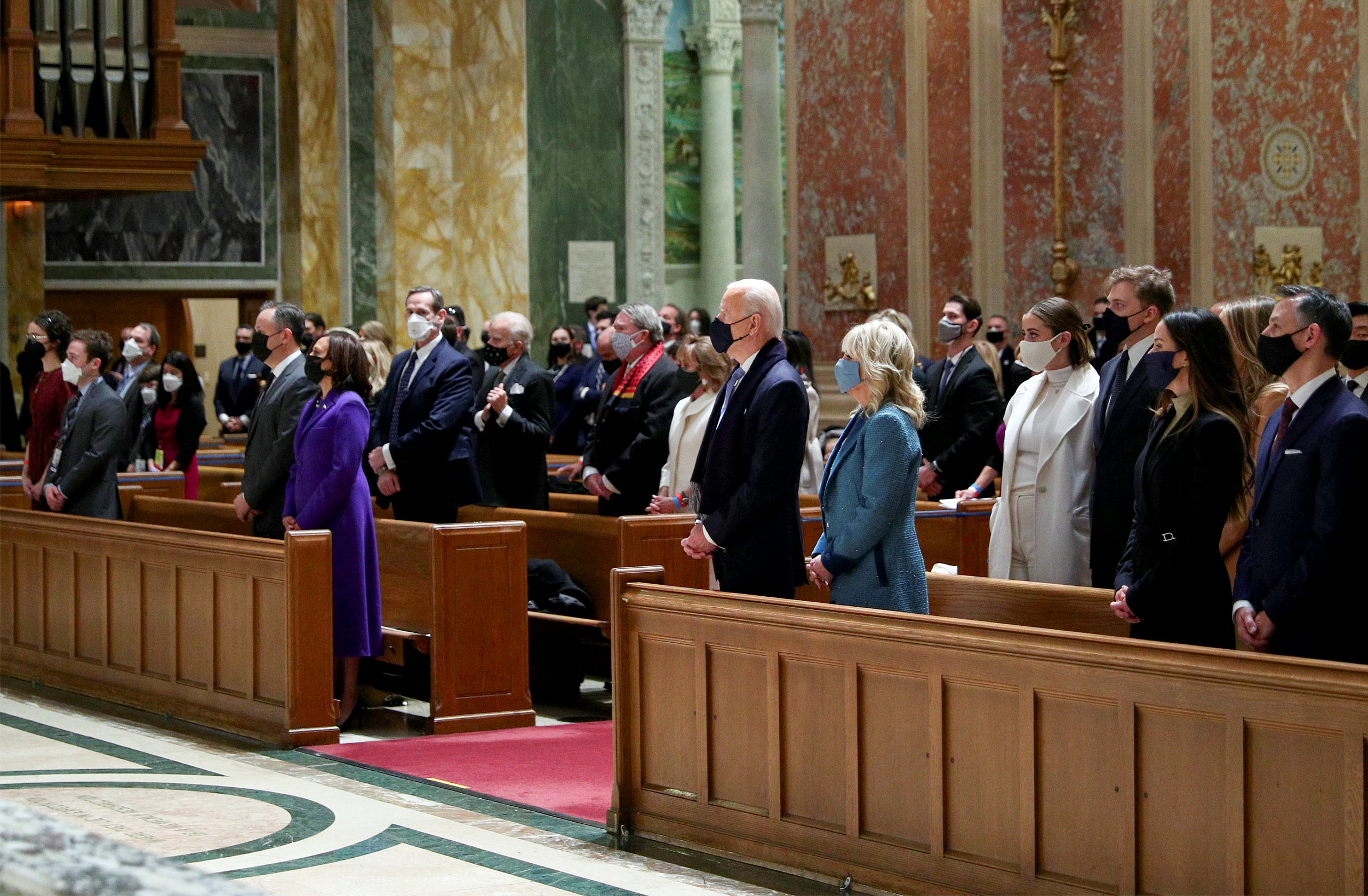
President-elect Joe Biden, his wife Jill Biden, Vice President-elect Kamala Harris and her husband Doug Emhoff attend a church service before his presidential inauguration, at St. Matthews Catholic Church in Washington, U.S., January 20, 2021. REUTERS/Tom Brenner

Well, it looks like — barring a last-minute intervention by Pope Francis himself, and maybe not even then — the U.S. bishops will consider and vote on a proposal for a teaching document about Communion that includes denying the sacrament to politicians who support pro-choice policies, including our nation’s second Catholic president, Joe Biden.

The bishops’ discussion — if you can call it that — and vote will happen at the virtual assembly June 16-18.

We say: Just do it.

Just do it, so that if there happens to be a Catholic remaining who is not convinced that the bishops’ conference, as it stands today, has become completely irrelevant and ineffectual, they will be crystal clear about that reality after the conference leaders move forward with this patently bad idea.

Despite plans to bury the real reason for the document in language about “eucharistic coherence,” this move is clearly aimed at Biden and the practice of his faith. Although Biden has said he is personally opposed to abortion, he has, as a politician, supported his party’s stance on the issue, including the most recent proposal to remove the decades-old ban on federal funding for the procedure.

The bishops’ plan is a terrible idea, first and foremost, because such excessive attention to the worthiness of those receiving Communion is contrary to a proper, traditional theology of the sacraments, which sees them as “not a prize for the perfect but a powerful medicine and nourishment for the weak,” as Pope Francis said in Evangelii Gaudium. (And don’t let speeches about how no one believes in the Real Presence anymore sway you, as those pontificators will likely be quoting a flawed survey. Most Catholics still know to genuflect when they cross in front of the tabernacle.)

We can think of no one who needs this “powerful medicine and nourishment” more than the president, who is faced with a pandemic, massive income inequality and racial reckoning, and the most serious threats to our democracy since the Civil War, not to mention the prospect of irreversible damage to the planet. That he happens to be a lifelong, churchgoing Catholic makes this  all the sadder.

Let’s be honest: The bishops’ proposal has little to do with theology and much to do with politics. If the bishops were actually looking for coherence of a moral sort from political actors, they would be issuing excommunication notices faster than Republicans suppress the vote.

The most tragic reality about moving forward with this proposal is that it will seal the deal on the branding of Catholicism in the United States as a culture war project.

The decision of the bishops’ conference to adopt an adversarial stance toward Biden is not only pastorally wrong, it is politically stupid, given the number of areas of agreement between this administration and the bishops’ own priorities. But the leadership of the conference is willing to sacrifice real accomplishments on immigration, child poverty and global warming to preen as preeminently pro-life and insist that one’s stance on the politics — not even the morality — of abortion be the linchpin for reception of the body of Christ.

The most tragic reality about moving forward with this proposal is that it will seal the deal on the branding of Catholicism in the United States as a culture war project. Like much of Protestant evangelicalism in the U.S., Catholicism already is perceived by many — including many of our young people — as an extension of that portion of the Republican Party that believes the “Big Lie,” promotes conspiracy theories about vaccinations and is willing to abandon all other principles to overturn a nearly 50-year-old court case — a judicial decision, by the way, that will not stop abortions from happening.

This culture war on the part of some members of the hierarchy, supported by donors with big pockets and personal economic agendas, and by right-wing media outlets that produce more propaganda than journalism, is not the church of mercy and encounter that Pope Francis is trying to offer the world. Nor does it resemble what the carpenter’s son from Galilee preached and died for. Those who try to insist that denying Biden Communion is in line with Francis’ earlier thought in South America may want to recall that this pope previously tried to expand — not narrow — reception of Eucharist for divorced and remarried Catholics. And they need to read all of the 2007 Aparecida document from CELAM (the Latin American bishops’ council), not just cherry-pick one paragraph.

This new “MAGA church,” with Donald Trump instead of Jesus as its savior, has already divided U.S. Catholics. Its symbol: a pastor who is removed by his bishop after spouting anti-immigrant, racist and medically false statements, only to raise $320,000 (and counting) from right-wing supporters who refer to other Catholics as the “false church of the modern Judas.”

From the Fortnight for Freedom during the Obama administration, to anti-gay marriage political campaigns and firings of LGBTQ teachers at Catholic schools, to Trump worship at the March for Life — this church for whom opposition to legal abortion is the first and only commandment will finally be complete once all those who have not prioritized Roe v. Wade in their voting decisions are banished from the Communion line.

The machinations to get this proposal through — despite interventions from within and without — are also dividing the bishops’ conference itself, such that our religious leaders are serving as Exhibit No. 1 during this period of polarization, rather than as examples of how to overcome it.

Some 67 U.S. bishops — about one quarter of the conference — put their names to a letter pleading with their brothers to delay this foolhardy plan. We suspect there are more — including some, such as Cardinal Timothy Dolan of New York, who first signed the letter then had his name removed — who agree with the plea to slow down this process. This means the document is unlikely to become actual law, since it needs both a two-thirds vote in favor plus approval by Rome.

The latter seems impossible, given the previous intervention from the Vatican, which tried to help the conference save itself by sending a politely worded warning to slow down on this rush to judgment. In fact, last month’s letter from Cardinal Luis Ladaria, the prefect of the Congregation for the Doctrine of the Faith, might have been too polite, as some conservative bishops and their in-the-pocket media have tried to spin the letter as saying the exact opposite.

So, go ahead: Use this virtual meeting — in which the bishops won’t really have the chance to talk frankly and freely with one another, whether in the meeting hall, at coffee breaks, or during dinners and other get-togethers — and ram through a document that will forever brand the church in the U.S. for the out-of-touch, cultural warrior-obsessed organization it has become.

The June vote will only be about an outline, but the script is already written. No matter what happens or doesn’t happen down the line, the media will have already run the story: “Catholics judge and deny Biden the practice of his own faith.” The damage will be done. TV crews will follow Biden (and other Catholic Democrats including House Speaker Nancy Pelosi, Illinois Sen. Dick Durbin and others) to see if they are being escorted out of church or not.

Those of us who follow internal church politics for a living have known for a long time that this current flock of bishops — a large majority still named during the papacies of John Paul II or Benedict XVI — is either lazy, out of touch, in the pockets of wealthy donors pushing a political agenda, or all of the above. (Yes, there are wonderful individual men who serve in the U.S. episcopacy, but we are talking about the official body of the conference, which represents them all.)

Maybe some everyday Catholics — in their busyness trying to put food on the table, raise kids in the faith and keep everyone alive and well during a global pandemic — have missed that their leaders would rather play politics and pick a schoolyard fight to distract from their own ineffectiveness.

If the U.S. bishops are not going to act like true followers of Jesus and leaders of his church on earth, then they might as well go ahead and pick that fight. At least then, it will be clear to all what they’re really about.A version of this story appeared in the June 11-24, 2021 print issue under the headline: Why we support the bishops’ plan to deny Communion to Biden .

Posted in Catholic Teachings, Ecclesiology | Leave a comment

Tackle clericalism first when attempting priesthood reform

by Fr. Peter Daly

If the priesthood is to be reformed, we must tackle the disease of clericalism. It won’t be easy. Clericalism is so deeply ingrained in our structures and way of thinking that we almost can’t imagine how things could be otherwise.

In his 2018 “Letter to the People of God,” Pope Francis condemned the sins of sexual abuse and the abuse of power in the church. He linked those sins to clericalism. “To say no to abuse is to say an emphatic no to all forms of clericalism.”

What is clericalism?

The Association of U.S. Catholic Priests put out a white paper on clericalism in June 2019. It defines clericalism is “an expectation, leading to abuses of power, that ordained ministers are better than and should be over everyone else among the People of God.”

In other words: clerics (bishops and priests) are often trained to think they are set apart from and set above everyone else in the church. Their word is not to be questioned. Their behavior is not to be questioned. Their lifestyle is not be questioned. They rule over the church as if they were feudal lords in a feudal society. That is often how they see themselves — lords of the manor, complete with coats of arms, titles of nobility and all the perks that go with “superiority.”

It is not just clerics who are clerical. The laity often foster clericalism by always deferring to “Father” and putting “Father” on a pedestal. Clericalism is experienced in thousands of words and deeds that add up to a “culture” or atmosphere. Clericalism shows itself when:

  • Seminarians say they are called to “chalices, not callouses.” (In other words, no physical work.)
  • People say, “Nothing is too good for “Father.” Or, “Father never picks up the check.”
  • Priests and bishops spend huge amounts of parish and diocesan money on themselves, with no controls. E.g., redecorating the rectory, building a new episcopal residence, taking lavish trips at church expense, or giving lavish gifts to each other with church money.
  • When the priest says, “This is my parish. My way or the highway.”
  • When 18-year-old college seminarians wear clerical garb to set themselves apart.
  • When parents tell their children, “Never question a priest.”
  • When people say that “the priests are ‘next to God.’ “
  • When bishops prioritize avoiding scandal over protecting victims of abuse by priests.
  • When thriving parishes are closed because there is a shortage of priests when there are deacons and lay people readily available to keep the community going.

All those things are symptoms of clericalism. The culture of clericalism can have horrific consequences.

The 2018 Pennsylvania grand jury set up to study clerical sexual abuse gave some egregious examples of priests and bishops who were protected from the consequences of sexual abuse by a “culture” of clericalism. Priests were routinely transferred around to avoid scandal, but nothing was done to warn the people in their new assignments. Priests were returned to ministry after “treatment” in church-run treatment centers that were not professionally staffed or competently run. Even after there was proven abuse and removal from ministry, priests continued to receive financial support while dioceses played hardball with their victims. Confidentiality agreements forced upon victims as part of settlement served only to shield the church from scandal and clerics from the consequences of their actions.

The Pennsylvania grand jury report gave several examples of children being beaten for talking “badly” about a priest when they came forward with their stories of abuse. In one case a girl who told her pastor of a sexual assault on her by another priest in the parish was humiliated in front of her biological father and told to recant that “made up story” of her assault. The grand jury said, “Her father did not believe her and proceeded to drag her home, yelling at her and slapping her along the way. When they finally got home, she was beaten more by her father, this time with a belt so that the belt buckle would strike her.”

So long as a “culture” of clericalism means that parents believe priests over the anguished stories of their own children, it will be very hard to hold priests and bishops accountable.

Even Pope Francis is guilty of this sort of clerical preference for some Vatican insiders. When Australian Cardinal George Pell was convicted of sexual abuse of several boys by the court in Australia, he was allowed to continue as prefect for the economy (the money guy) in the Vatican, pending appeal. One of Pell’s victims had committed suicide. Pell, like former cardinal Theodore McCarrick, was protected by clericalism. He was a member of the most exclusive “old boys” club in the church, the College of Cardinals.

In a way, priests and bishops are also “victims” of clericalism. If clericalism puts us on a pedestal, it also isolates clergy from ordinary friendships. We are always, “Father” or “Your Excellency” and never just Peter or Jim. If clericalism gives the priest and bishop greater control, it also gives them greater responsibility. Having unquestioned “authority” to speak on so many matters also means that priests are expected to have answers beyond their competence.

The Association of U.S. Catholic Priests report also observed, “Clericalism in lay people blocks the necessary feedback that helps keep the Church faithful to the gospel, and it blocks the feedback the ordained need to properly serve the community.”

The laity, the clergy, and the church all suffer from the culture of clericalism. It distorts our human relationships and corrupts the body of Christ.

Worst of all, it is not faithful to the vision of Christ. He calls on us all to be servant leaders, not imperious rulers.

You know how those who exercise authority among the Gentiles lord it over them; their great ones make their importance felt. It cannot be like that with you. Anyone among you who aspires to greatness must serve the rest, and whoever wants to rank first among you must serve the needs of all. Such is the case with the Son of Man who has come not be served by others but to serve, to give his life as ransom for the many (Matthew 20:25-28).

Published in the National Catholic Reporter

[Fr. Peter Daly is a retired priest of the Washington Archdiocese and a lawyer. After 31 years of parish service, he now works with Catholic Charities.]

Posted in Ecclesiology | Tagged , | Leave a comment

Confession and Transparency equals the Truth

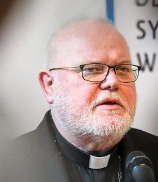
Cardinal Reinhard Marx’s Letter of Resignation

21st May 2021


Holy Father,


Without doubt, these are times of crisis for the Church in Germany. There are, of course, many
reasons for this situation – also beyond Germany in the whole world – and I believe it is not
necessary to state them in detail here. However, this crisis has also been caused by our own
failure, by our own guilt. This has become clearer and clearer to me looking at the Catholic
Church as a whole, not only today but also in the past decades. My impression is that we are at a “dead end“ which, and this is my paschal hope, also has the potential of becoming a “turning point“.

Of course, the “paschal faith“ also applies to our pastoral care as bishops: For whoever wishes to save his life will lose it, but whoever loses his life will find it!
Since last year, I have thought about this more thoroughly and have asked myself what this means for me personally and I have decided – encouraged by the Easter period – to ask you to accept my resignation as Archbishop of Munich and Freising.


In essence, it is important to me to share the responsibility for the catastrophe of the sexual
abuse by Church officials over the past decades. The investigations and reports of the last ten
years have consistently shown that there have been many personal failures and administrative
mistakes but also institutional or „systemic“ failure. The recent debates have shown that some
members of the Church refuse to believe that there is a shared responsibility in this respect and that the Church as an institution is hence also to be blamed for what has happened and therefore disapprove of discussing reforms and renewal in the context of the sexual abuse crisis.


I firmly have a different opinion. Both aspects have to be considered: mistakes for which you
are personally responsible and the institutional failure which requires changes and a reform of
the Church. A turning point out of this crisis is, in my opinion, only possible if we take a
“synodal path”, a path which actually enables a “discernment of spirits” as you have repeatedly
emphasised and reiterated in your letter to the Church in Germany.


I have been a priest for forty-two years and a bishop for almost twenty-five years, twenty years
thereof I was an ordinary in large bishoprics. It is painful for me to witness the severe damage
to the bishops‘ reputation in the ecclesiastical and secular perception which may even be at its
lowest. To assume responsibility, it is therefore not enough in my opinion to react only and
exclusively if the files provide proof of the mistakes and failures of individuals. We as bishops
have to make clear that we also represent the institution of the Church as a whole.


And it is also not right to simply link these problems largely on past times and former Church
officials thereby „burying“ what happened. I feel that through remaining silent, neglecting to
act and over-focussing on the reputation of the Church I have made myself personally guilty
and responsible. Only after 2002 and even more since 2010, those affected by sexual abuse
have been brought to the fore more consequently and this change of perspective has not yet
been completed. Overlooking and disregarding the victims was certainly our greatest fault of
the past.


In the aftermath of the MHG survey commissioned by the German Bishops‘ Conference I stated in the Cathedral of Munich that we have failed. But who is this “We“? In fact, I also belong to this circle. And this means that I must also draw personal consequences from this. This is becoming increasingly clear to me.


I believe one possibility to express this willingness to take over responsibility is my resignation.
In doing so, I may be able to send a personal signal for a new beginning, for a new awakening
of the Church, not only in Germany. I would like to show that not the ministry is in the
foreground but the mission of the Gospel. This too is an element of the pastoral care. I therefore strongly request you to accept this resignation.


I continue to enjoy being a priest and a bishop of this Church and I will keep committing myself
in pastoral matters, wherever you deem it reasonable and useful. In the next years of my
service, I would like to increasingly dedicate myself to pastoral care and support an
ecclesiastical renewal of the Church which you also call for incessantly.


Oboedientia et Pax and oremus pro invicem

Reinhard Cardinal Marx
Archbishop of Munich and Freising

Posted in Ecclesiology, Morality | Leave a comment

AMERICA’S SPIRITUAL COLLAPSE

Anthony T. Massimini, Ph. D.

     I was in high school during World War II.  After D-Day, June 6, 1944, I bravely fantasized running onto the beach at Normandy with the invading Americans.  I would have proudly done everything I could for my beloved America.  Today I mourn for it.  

      I fear that an ever increasing number of us have lost respect for our  unalienable right to life, liberty and the pursuit of happiness for all Americans, and for the rule of law contained in our Constitution.  

     our nation is experiencing an historical change.  The predominate color of our population is changing from White to Black and Brown.  In strong reaction, a frightened and frightening portion of White Americans, deeply committed to the notion of White privilege, have fallen into mindless, soul-sapping, aggressive social and political anger, and even violence against our fellow Americans of color.  Such behavior is not only immoral, but in its intensity it has it has fallen to the depth of our losing our God-given human dignity and integrity.  The result is that America is losing its soul and is falling beyond moral collapse into spiritual collapse.  

     We are losing touch with our deepest selves–with our humanity itself and with God.  If we continue on this path we will lose not only ourselves but our democracy and our country.  

     This spiritual collapse has been a long time coming.  I can think back to the 1960’s when our World War II and 1950’s culture fell apart and was followed by the naive immaturity of the Hippies, Woodstock and the “Coming of the Age of Aquarius,” with its naive vision of “peace and understanding.”  Unhappily, what followed was the 1970’s and the “Me Generation.”   

      We are choking in the ashes of an educational, religious and cultural collapse.  What we have left is a society in which people are murdered on the streets and in places of employment almost every day.  Today a former employee murdered eight of his former co-workers.  Then, in a symbol of our times, he killed himself.  Our culture is killing itself.  

     Too many of us have forgotten who we are as humans, Americans and the People of God.  We are living a lie.  St.  John tells us that Satan is the Father of Lies.  (Jn. 8:44)  And perhaps the worst lies are the lies that we tell to ourselves.  Many corporate executives lie to themselves and believe that they deserve to be paid hundreds of times more than the employees.  Lies flood the Internet.  The self-deluded Evangelical preachers lie about their “messages” from God.       

     We are drowning in political lies.  President Trump told 30,000 lies during his tenure in office.  There is a reason for his behavior:  he is the victim of the emotionally and spiritually brutal treatment inflicted on him by his father.  But as president, he found a vast number of  Americans who, in their own way, had begun to lose their sense of truth and humanity.  Together, they formed a perfect storm. 

      The storm particularly showed itself on January 6th when a mob of demented Trump followers attacked our Capitol, causing five deaths and coming horrifically close to harming and maybe causing the death of members of Congress and even of Vice President Pence.  

     And yet, the storm continues.   A politician appeared on TV and calmly stated that the lethal attack was no different from an ordinary day when tourists visit the Capitol.  In Arizona, Trump’s followers are  conducting a recount of votes, idiotically looking for bamboo in the ballots.  The House of Representatives removed a member from her duties because she told the truth, while, as above, it permits other members to tell truly insane lies.  Such human emptiness is beyond immorality.  It is a fall into evil!

     So, what are the People of Christ called to do in this present spiritual collapse?  Well, the Catholic bishops have one answer:  denying Communion to President Biden because he is “pro choice” regarding abortion.  And then what?   

     What are the Catholic laity (ever decreasing in number) being trained and commissioned to do in their everyday lives to help bring our society back to life?  They are the Church in today’s broken society.  The Spirit of Christ fills the world, giving them the grace of enlightenment , strength and vocations to get actively involved in our society to help make it ever more clearly the Kingdom of God on Earth.  

     They are personally engaged in society every day.  And they enjoy the grace of Christ to give them insight into the worlds of the family, education, work, politics, etc.  They are the ones called by God to physically, morally and spiritual care for and elevate our society to make it more Christ-like in justice, order, peace, respect, etc., etc., all of which are expressions of love.

     So I suggest that the bishops put down the Book book of Canon Law and pick up the Gospels, the Acts of the Apostles and see how the Church really should operate.  Of course, I recommend as absolutely necessary, that they read the teachings of Vatican II, for which they have never shown a real understanding or will to implement.  

     In the meantime, may God give the laity the insight and will to implement their faith to help bring our everyday society one little step closer to being the Kingdom of God on Earth that Jesus prayed for.

(Tony was a professor at the seminary when I was there 1964-1971. He is a good friend, mentor and spiritual advisor.) HIs is blog is: https://the21stcenturyamericancatholic.blogspot.com/

Posted in Spirituality | Tagged | 2 Comments

Christ and the Meaning of Authentic Humanism

PAUL KRAUSE

I am a humanist, but not that kind of humanist. Humanism is a term that gets thrown around a lot these days—but like most terms that once had a strong philosophical foundation, humanism has been so thoroughly detached from its philosophical substance it is another empty term in public consciousness. That said, it is an important concept and one that Catholics should reclaim.

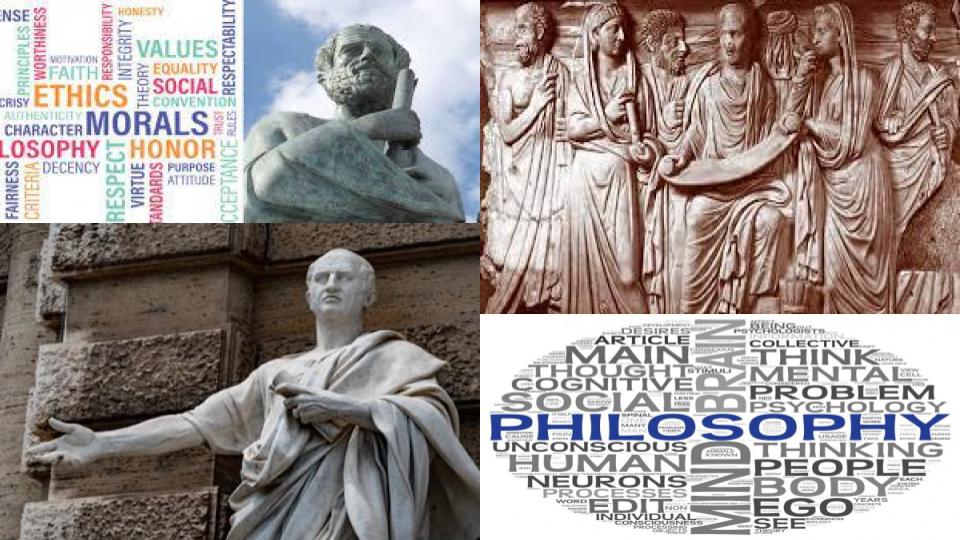
All students of philosophy, both irreligious and religious, will learn that humanism—whilst having antecedent roots in Cicero and Plotinus—was really the result of Catholic anthropology. Humanism, on one hand, is a life embodied by the art of reading and writing—“the man of letters.” But more explicitly as it relates to philosophy, humanism is the belief in human nature, that human nature has a telos (or end), and that the end of human nature is eudemonia (or happiness). Humanism also extols the dignity of mankind, seeing humanity as occupying a special place within the world—Judaism and Christianity call this dignity and specialness the imago Dei.

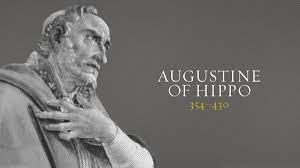
When studying humanism St. Augustine looms large. Augustine is widely seen as the father of humanism, and the tradition of anthropology that Augustine established helped shaped and form the emergence of humanism come the Renaissance and beyond. After all, part of the core of Augustine’s philosophy of the self, rational introspection, and the importance of reason to humans and humanity’s ability to understand oneself and one’s nature, was one’s search for understanding oneself, which led to the discovery of God since one is made in the image of God. True self-knowledge, then, is also a coming into communion with the Divine.

The problem, however, with neo-Platonism’s proto-humanism was that it extolled only man’s capacity for reasoning. Reason may help cultivate virtue and push humans toward the want for knowledge of the One (the neo-Platonic conception of God), as Plotinus rightly knew, but neo-Platonism erred in never extolling the beauty and goodness of the human body or the material world. While the Manicheans and Gnostics were heretical Christians and heretical Platonists, there is a certain truth in seeing the heresy of the Manicheans and Gnostics as ultimately rooted in neo-Platonism’s tacit rejection of the goodness of matter. It was precisely this worrying tendency of seeking flight from the material world in neo-Platonism which had come to take on a theologized character in Manicheanism that Augustine confronted in Confessions.

This is the great achievement of Catholic humanism—it promotes a true dignity of the fullness of human nature, which includes the body. Everything that God decreed was good, and so too does this extend to materiality. Though through the Fall humans no longer have the harmonious union between eros and logos, which necessitated the incarnation of the Word to restore the imago, but not even the Fall renders the body and materiality evil. This is why the Apostle Paul obsesses over the importance of resurrection—which itself is the other half of the incarnational drama, without the resurrection of the dignified human body the incarnation of the Word loses its power.

The incarnation of the Word, in taking on material corporeality, brings an added dignity to the human body beyond simple creation and imago Dei. The importance of the Word becoming incarnate into the world is also important in understanding the restoration of imago Dei in Augustine’s anthropology. The incurvatus in se—the inward curve to the self—is the root of all sin; it is the attempt to find wisdom and happiness apart from the source of wisdom and happiness. In other words, “man is the judge of all things.” This was the Original Sin that destabilized the unity of desire and reason. The end result is humans seeking happiness through pure concupiscence without the ordering force of logos and being perpetually unsatisfied and alienated with their soul. Christ’s incarnation, since Christ is Word and wisdom—the logos as the Early Church understood—also embodies the unity of eros and logos, of desire and reason, in his perfect nature. The Word’s incarnation, as Augustine knew and wrote about in De Trinitate, reflects and embodies the highest calling man can strive for—the restoration of the imago Dei.

St. John Paul II best summarized this calling for excellence and dignity in Theology of the Body and in his constant claim that humans are “called for greatness.” Properly speaking, Catholic doctrine and Augustine’s philosophical anthropology does not view desire as something bad. It is something good—desire is written on the human heart for wisdom and happiness as the Catechism proclaims which should properly lead one to God. As Augustine wrote, “Thou hast formed us for Thyself, and our hearts are restless till they find rest in Thee.” The problem of concupiscence is when it detaches itself from the source that it seeks.

Plotinus knew that man’s search for truth brought him into a henosis (union) with the One. But Plotinus’s work carries the implied detachment of reason from the body, something that Catholicism strongly opposes. Catholic concerns over “restriction” of bodily action is not a constraint against liberty, it is the highest promotion of liberty: true human flourishing. Those who denigrate their bodies, and their souls in the process, only grow more and more alienated and conflicted with themselves. We are called to greatness with dignity; it is startling that our society has greatness and dignity confused with alienation and denigration.

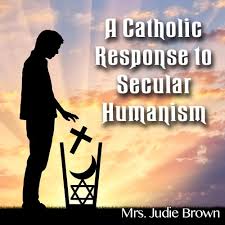
Today’s “humanism” is hardly the dignified humanism of Augustine, Giovanni Mirandola, or Erasmus. It is essentially an anti-humanism that rejects all the core tenets of traditional humanism and maintains the highest end of humanity is free choice to be whatever one wants to be. Basically modern “humanism,” which is no humanism at all, is a rebellion against humanism—the ultimate outcome of Hobbesian anthropology that reduces humanity to mere “matter in motion” with nothing more than an insatiable desire for power, consumption, and material self-advancement. The self-exhausting end to Hobbes’s materialist anthropology is trans-humanism, itself the logical end of the implicit atheism and sensual hedonism that his anthropological philosophy begets.

Rather than happiness being internal and rooted in the health of the soul, which when found and cultivated, dignifies the human body and the whole world, Hobbes and anthropological liberalism lowers the bar to the lowest common denominator in man. As Leo Strauss explained in Natural Right and History, Hobbes’s explicit hedonism and implicit atheism rejects the entire Greco-Christian ethical tradition of excellence. “Free Choice” rather than teleological flourishing, sensual hedonism rather than bodily dignity, and ethical egoism rather than common good, are the new heights for humanity to strive for. That is to say there is no striving for excellence at all.

The humanism of Hobbes, and the “secular humanism” of today, is no humanism at all. It advances a fallen man, rather than an incarnate Word, as the highest image of existence. It advocates for a modified Epicurean hedonism, rather than virtue ethics, as the highest calling for human behavior. It de-humanizes the human body, through an implicit atheism, and calls this de-humanized and exploited body true dignity. Secular humanism celebrates the destruction of the human body and the incurvatus in se as the highest expression of freedom and human flourishing.

Anthropology, which is the study and understanding of what it means to be human, has far reaching consequences regarding which school of anthropology dominates culture. Catholic philosophy inaugurated the elevation of anthropological philosophy precisely because Catholic philosophy, with its marriage to the incarnation of the Word, must get human nature and human existence right. At the heart of Catholic anthropology, which is ultimately founded in Augustine, values and extols the virtues of the body, magnanimity, and prizes ontological flourishing—life—as the heart of human existence and living.

Hobbesian anthropology, on the other hand—and Hobbes’s anthropology dominates the heart of Western liberalism—values egoism, emancipation, and is rooted in not harmony and life as Catholic anthropology is, but conflict and violent death. After all, Hobbes maintains that the starting point of human existence is not the harmony of man and God in a beatification vision, but a “war of all against all” in the state of nature that exhausts itself in a life that is “solitary, poor, nasty, brutish, and short.” Hobbesian anthropology, and the Whiggish myth of progress, is flight from the human condition—it logically and necessarily exhausts itself in what C.S. Lewis called the “abolition of man.”

In Hobbes’s account humans are a random assortment of atoms bouncing off each other that propels us into motion. In Augustine’s account humans are made in love to love, in wisdom for wisdom, and in communion for communion. Happiness and flourishing is our end, not material possession, choice, or emancipation, and we know, as Catholics, where human flourishing is to be found. The happy human cannot be happy unless he is in communion with the source of the beatitudes. And culture will not beget life unless it has the source of life at its center.

Paul Krause a humanities teacher, classicist, and essayist. He is also a Senior Contributor to The Imaginative Conservative and Associate Editor at VoegelinView.

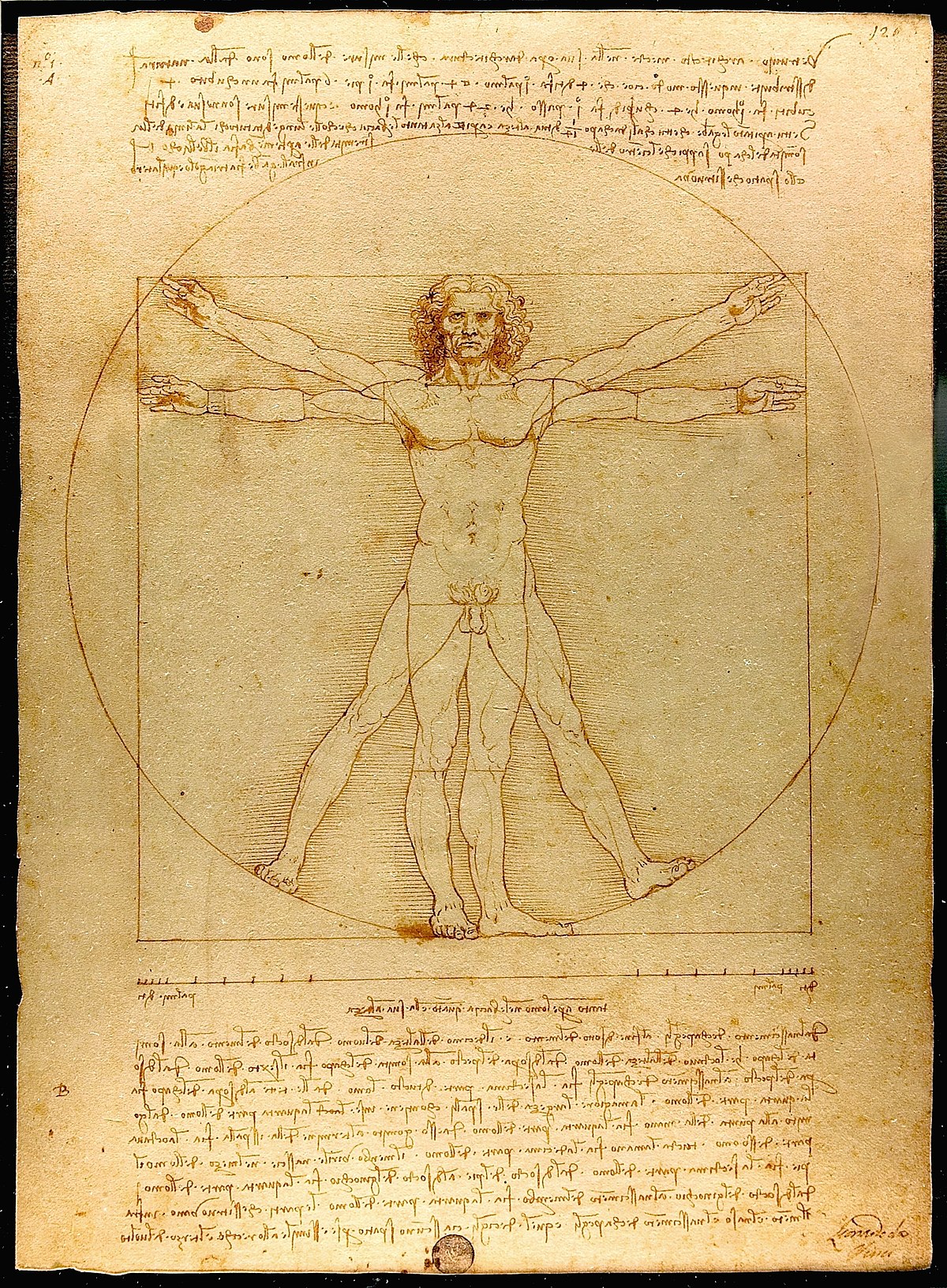
Leonardo da Vinci’s Vitruvian Man
Posted in Theology | Leave a comment

Jesus the Christ: Top Down or Bottom Up

There’s little doubt that culture plays a significant role in determining how we understand words, ideas, concepts, and beliefs. Inculturation, or the gradual acquisition of the characteristics and norms of a culture or group by a person, or another culture, played a role in how the teachings of Jesus were communicated by Paul, the most influential disciple, and even John, the author of a gospel and three letters. This inculturation contributed to the predominant Christian belief that Jesus was God who became man instead of a man who became divine.

Scholars hold that John and Paul were influenced by the Hellenization of their communities and therefore evangelized their communities or Churches in the vocabulary and ideas with which their members were most familiar. Logos is certainly one word that most Jews would not know unless they lived in the Greek cities where Paul and others like John would have preached about Jesus.

“In the beginning was the Word, (logos) and the Word (logos) was with God, and the Word (logos) was God. Did John decide to use Logos to relate this saying of Jesus, “The Father and I are one.” because Jesus wasn’t just the “image and likeness” of the Creator as the Genesis author writes, but the principle of divine reason and creative order coming from the Creator,      or as E.F. Scott writes in his  article, “the Hellenistic Mysticism of the Fourth Gospel” Jesus was “the utterance of divine manifestation of the supreme God”, the Word made flesh.

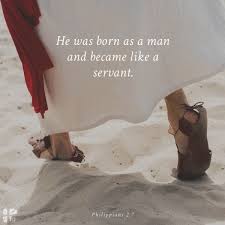
Those of us who have heard these introductory remarks in John’s gospel, have come to believe that Jesus was God before he became man. But Paul preached that Jesus “being in very nature, God, did not consider equality with God something to be used to his own advantage; rather, he made himself nothing by taking the very nature of a servant, being made in human likeness.” This seems to stress a bit more humanity than divinity. This could mean that, as a human, Jesus grew into divinity just as all of us are called to do.

One has to wonder, as I do, why Jesus acted so much in concert with God’s Will.  Had he a memory of being in union with the Divine Creator, and therefore felt empowered to act in the name of God (top down) or did he come to grow closer to God by opening up to the power of the Holy Spirit (bottom up) so that God would eventually declare: “This is my Son, whom I love; with him I am well pleased.” Isn’t this what Catholics call grace and isn’t that what happened to his mother, Mary. “And having come to her, he said, “Greetings, you favored with grace! The Lord is with you.”

Mary was open to the Divine. The Magnificat testifies to this and grace was such a gift that she was assumed into the Divine presence upon her death. Isn’t that what we hope for?

Didn’t Jesus confirm this notion of grace as a gift  when he said, “Very truly I tell you, whoever believes in me will do the works I have been doing, and they will do even greater things than these” Isn’t that what the sacraments of Baptism and Confirmation are all about- empowering us to grow closer to God? The old catechism definition that we know by heart: “Sacraments are outward signs instituted by God to give grace” And what is this grace for but to grow in faith, hope, and love thus uniting with God!

Most Christians would not accept the notion that Jesus became God by the grace of the Holy Spirit! Why not, I ask? If he was truly human, how else would he realize his divinity? How or why would he come to say, ”the Father and I are one”? Did he believe he was God?  He wasn’t pretending to be human, was he? Well, NO! So what happened after his baptism when he heard those words, “This is my Son, whom I love; with him I am well pleased.” Aren’t we all sons and daughters  or children of God after our baptism? The term “son of God” is used in the Hebrew Bible as another way of referring to humans with special relationships with God. It gets more intriguing.

“Filled with the Holy Spirit, or grace, Jesus returned from the Jordan and was led by the Spirit into the desert for forty days, to be tempted by the devil.” So, here we have Jesus now aware that he is in a special relationship with YAHWEH as a result of the grace of the Holy Spirit. Did this grace which filled him make him feel “full of himself” or make him realize that he was God? I doubt that. A good Jew would be horrified to even consider such a thought. So why did he consent to being led into the desert to be tempted? Perhaps, his parents had shown him that humility is required if we are to do the Will of God and that he needed to spend time trying to understand or discern his special relationship or vocation as we might call it. Are we not taught by the Catholic Church to do just that after Confirmation? Are we not taught that we receive the gifts of the Holy Spirit: Wisdom, Understanding, Counsel, Fortitude, Knowledge, Piety, and Fear of the Lord. Are not those who live these gifts deemed “saints” or “martyrs” which is Greek for witnesses? It gets better, yet.

While praying in the desert for 40 days “he ate nothing during those days, and when they were over he was hungry.” This could make one ask the question, was Jesus delirious when the temptation occurred? Did he imagine Satan speaking to him or did he simply come to the realization that Power, Fame, and Fortune, could corrupt a son of God and therefore lead him to be just like the Pharisees he had come to despise? (He did call them a brood of vipers.) I believe it was the latter. Read about the temptation in Luke and see if you understand what is the significance of the three challenges Satan proposed to him. 

First: “If you are the Son of God, command this stone to become bread.” 

Second: “If you are the Son of God, throw yourself down from here, for it is written:

‘He will command his angels concerning you to guard you.’                                                                                                      

Third: “Then he took him up and showed him all the kingdoms of the world in a single instant. The devil said to him, “I shall give to you all this power and their glory.”

Wasn’t he tempted to accept power, fame, and fortune? 

How could one who would be doing the Will of God identify with the worldly characteristics that God commanded his people to avoid? The story proceeds

“Jesus returned to Galilee filled with the Spirit, and news of him spread throughout the whole region.” Jesus had to remember not to let “fame” overwhelm him. He often went off alone after experiencing the power of God on the occasions when healing, feeding, and teaching were so well received.

Nonetheless, we must consider how Christians over the centuries have succumbed to “fame”, even “power’ and certainly even “fortune”. But didn’t Jesus send his disciples out with this directive: “Go on your way; behold, I am sending you like lambs among wolves. Carry no money bag, no sack, no sandals; and greet no one along the way…..Stay in the same house and eat and drink what is offered to you, for the laborer deserves his payment. Do not move about from one house to another. Whatever town you enter and they welcome you, eat what is set before you.” Surely the hundreds of disciples heard these words or read them. So, what happened?

Well, once the Christians accepted the protection from persecution that Rome offered them under Constantine, when Christianity became the official religion of Rome, they must have forgotten those words, that directive. They adopted the ways of Rome and abandoned the ways of Jesus!

Power, fame, and fortune have increased for most Christians ever since. Consider the palatial palaces of the Popes, the wealth given by the Royalty of European nations, the monies collected from Indulgences and stipends for celebrating the Eucharist. Certainly the wardrobe, pomp and circumstance of clergy over the centuries cost a pretty penny! What about all the famous evangelists, especially those in the media? Are they not accepting power, fame, and fortune?

In his unusual book, Jesus, Symbol of God, Roger Haight presents the possibility of a Spirit Christology(bottom up) in contrast to a Logos or Word Christology (top down). “What is characteristic here is a thoroughgoing Spirit Christology, one that “explains” the divinity of Jesus Christ on the basis of God as Spirit and not on the basis of the symbol Logos”…. “Carl Rahner made the case that the whole point of Jesus Christ, his God, and the salvation he mediates is the completion of the human.” In other words, that’s what we who follow Jesus are expected to become: One with God! The Incarnation of God in Jesus was not a magic act but “the utterance of divine manifestation of the supreme God.” which became Jesus Christ who then said, when asked by Thomas, “Master, we do not know where you are going; how can we know the way? Jesus said to him, “I am the way and the truth and the life. No one comes to the Father except through me.”

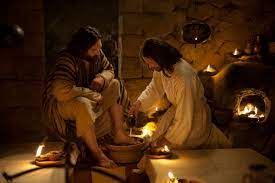
This is the same Jesus who rebuked power, fame, and fortune, the same Jesus who said, “carry no money bag, no sack, no sandals; Stay in the same house and eat and drink what is offered to you.” This is a far cry from palaces, castles, indeed the Vatican! How many bishop’s residences are palatial estates, how many rectories are just as spacious and well furnished. I could go on but the lesson to learn from the bottom up or Spirit Christology is that we must imitate Jesus not ignore him and his lifestyle and hard teachings. Top down or Logos Christology empowers us to want to be like God, to assume the power of God. How many preachers and clergy accept the fame and notoriety of their role? How many accept the hard demand of Jesus? How do we react to the hard teachings of Jesus?

Are we like the rich young man? “Jesus told him, “If you want to be perfect, go, sell your possessions and give to the poor, and you will have treasure in heaven. Then come, follow Me.” When the young man heard this, he went away in sorrow, because he had great wealth. Then Jesus said to His disciples, “Truly I tell you, it is hard for a rich man to enter the kingdom of heaven.…”

If Jesus can do it with the grace of God, with the Holy Spirit, so can we!

Posted in Christology | Leave a comment